

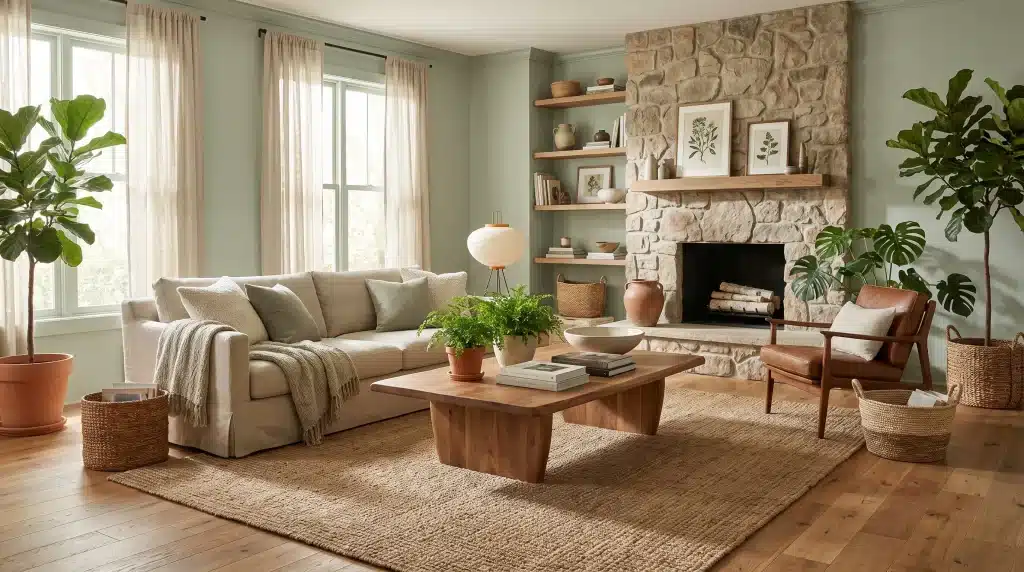


My grandma once painted her kitchen a green so bright it looked like a lime popsicle.
She loved the idea of adding color, but within a month, she was ready to repaint. That memory stayed with me for years and made me hesitant about green walls.
Then I came across Benjamin Moore Saybrook Sage, and it completely changed how I saw green paint. This is a soft, muted sage that feels calm, natural, and timeless.
It brings a touch of the outdoors inside without making the entire room revolve around the color.
Choosing the right green is about more than liking a paint chip. Undertones, lighting, flooring, and trim all influence how the shade comes to life in a space.
Saybrook Sage works because it brings color in a way that still feels comfortable and easy to live with.
What Makes Benjamin Moore Saybrook Sage Stand Out?
Saybrook Sage HC-114 comes from Benjamin Moore’s Historical Colors collection, and it has a quiet, grounded quality that works in both older homes and newer spaces.
Unlike brighter greens that demand attention, Saybrook Sage has a soft, grayed-down look that blends naturally into a room. It adds color while still letting your furniture, textures, and decor take the spotlight.
| Feature | Details |
|---|---|
| Color Name | Saybrook Sage |
| Code | HC-114 |
| Collection | Historical Colors |
| LRV | Around 45 to 46 |
| Color Family | Green |
| Undertone | Soft gray-green with a touch of yellow |
LRV, or Light Reflectance Value, shows how much light a paint color reflects back into a room on a scale from 0 to 100. With an LRV around45 to 46, Saybrook Sage sits comfortably in the medium range.
It has enough depth to feel intentional without becoming too dark or heavy. The result is a balanced sage that feels fresh in bright rooms and cozy in softer lighting.
Why Does Saybrook Sage Feel So Calm and Natural?
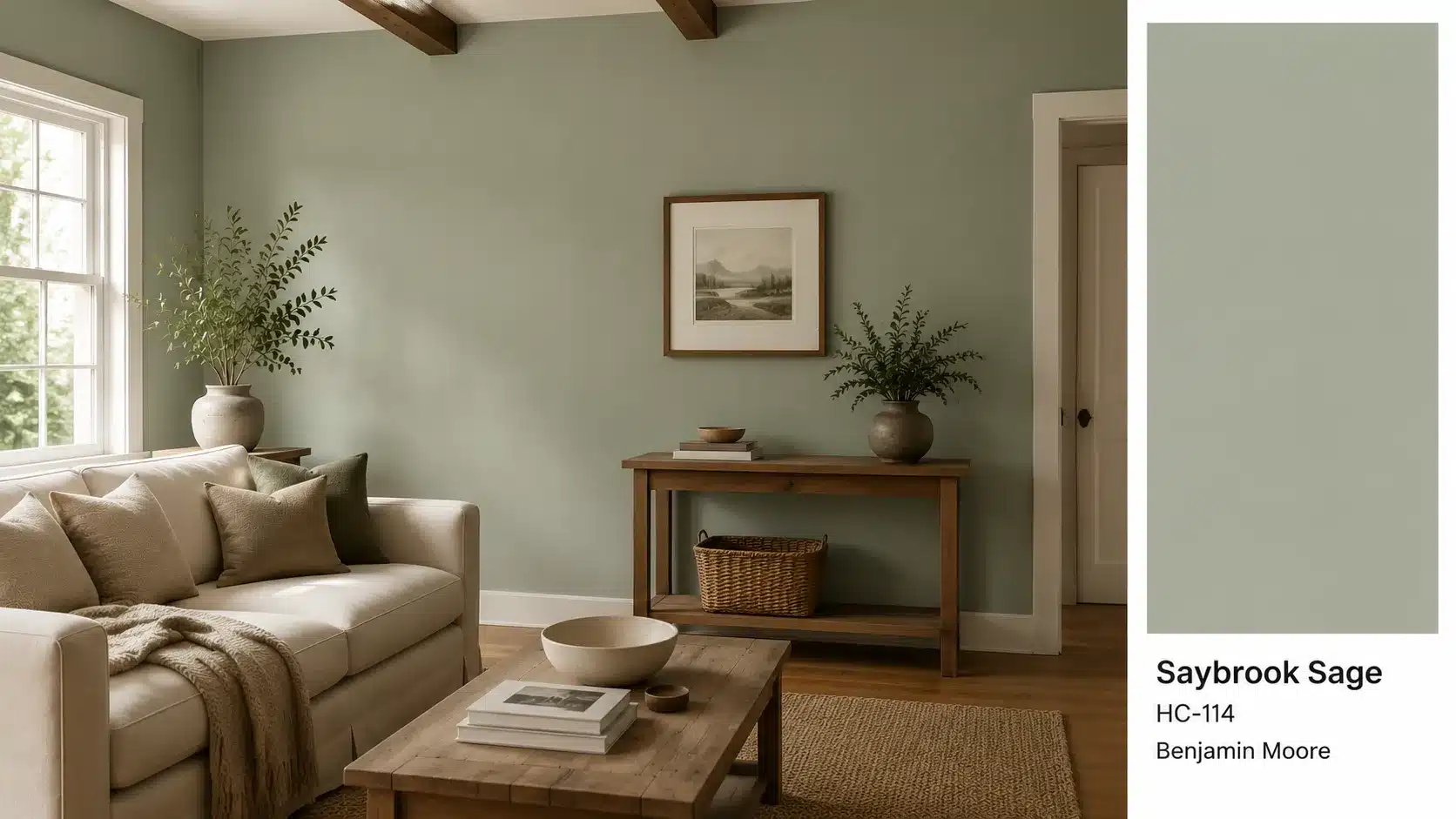
Saybrook Sage connects a room to nature without turning it into a themed space. Think of dried herbs, olive leaves, and weathered stone, all soft and worn by time.
The gray running through Saybrook Sage takes the edge off the green, so it never feels artificial or sharp.
That softness is what makes everyone pick it when they want personality on the walls without a bold statement.
This color complements a room instead of overpowering it. Think of a living room with a linen sofa and a wooden coffee table. Saybrook Sage sits behind those pieces like a quiet backdrop.
It lets the textures do the talking. In a bedroom, paired with soft cotton bedding and warm lamp light, it feels like a place to rest. In a home office, it creates a calm backdrop without feeling cold or plain.
Is Saybrook Sage Too Green?
You are probably wondering if Saybrook Sage will feel like a true sage green or if it will lean too far into green once it reaches your walls.
One reason it works well is that it stays on the softer side. Saybrook Sage leans more toward gray than green in most spaces, and that muted quality is what keeps it feeling calm and natural rather than bright or artificial.
The finishes around it will still influence the way it reads. Warm wood tones can bring out the earthy side, while crisp whites and cooler finishes can make the gray influence stand out more.
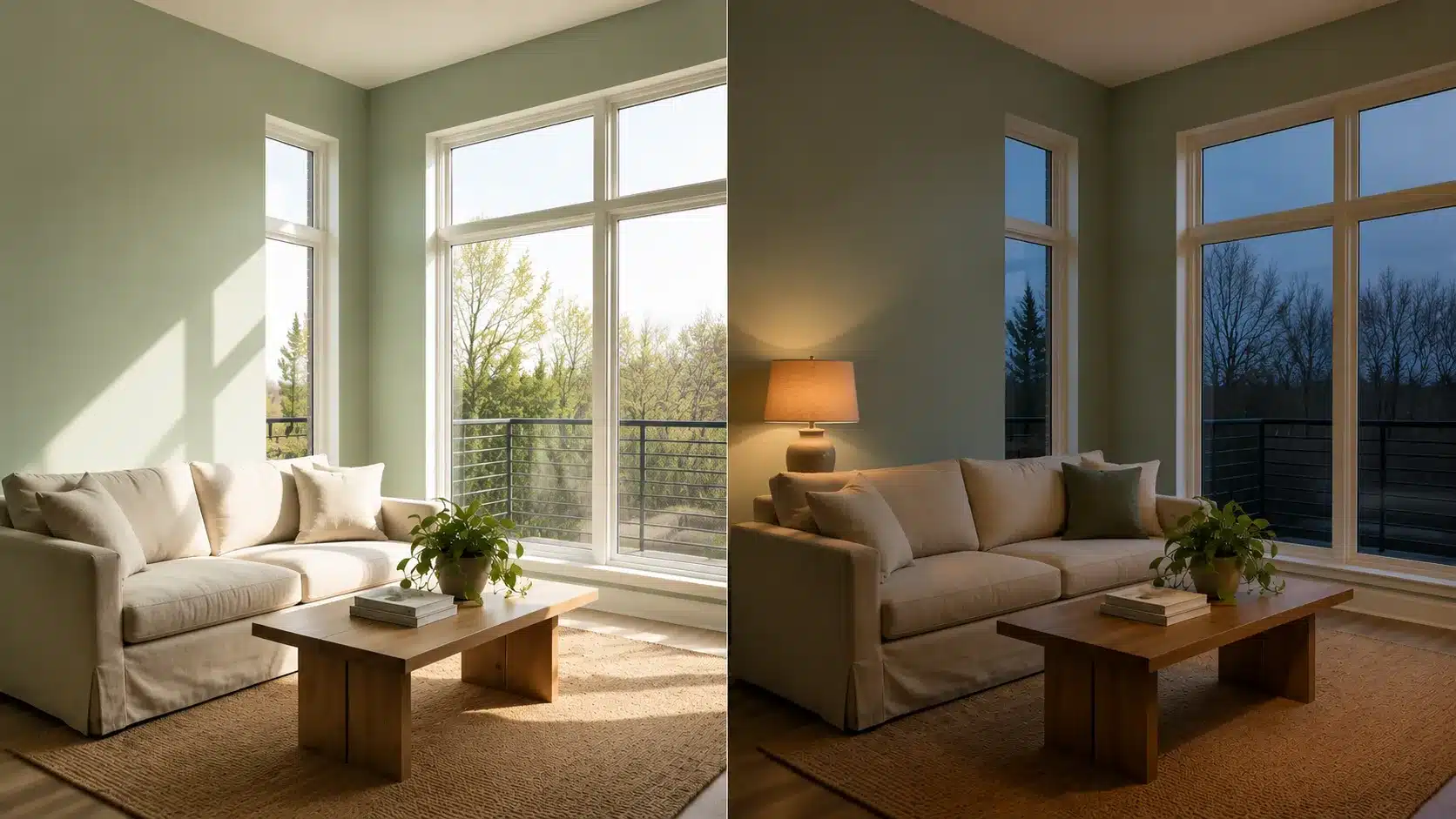
In bright natural light, Saybrook Sage reveals a fresher side, with sunlight making the green feel lighter and more natural while keeping its soft, muted character.
In lower light, the shade becomes deeper and quieter, with gray undertones becoming more noticeable. Warm lighting can bring out subtle olive tones, while cooler light may emphasize its gray influence.
Testing a sample on your wall is the best way to see how it works with your room’s lighting, flooring, and finishes.
Where Does Saybrook Sage Work Best?
Saybrook Sage is one of those colors that can move comfortably from room to room. It does not need a specific style or a perfect setting to work, but certain spaces really bring out its personality.
The fun part is seeing how differently it can feel depending on what surrounds it. In one room, it feels warm and earthy.
In another, it feels calm and refreshing. Here are the spaces where Saybrook Sage naturally fits in.
1. Living Rooms with Warm Textures
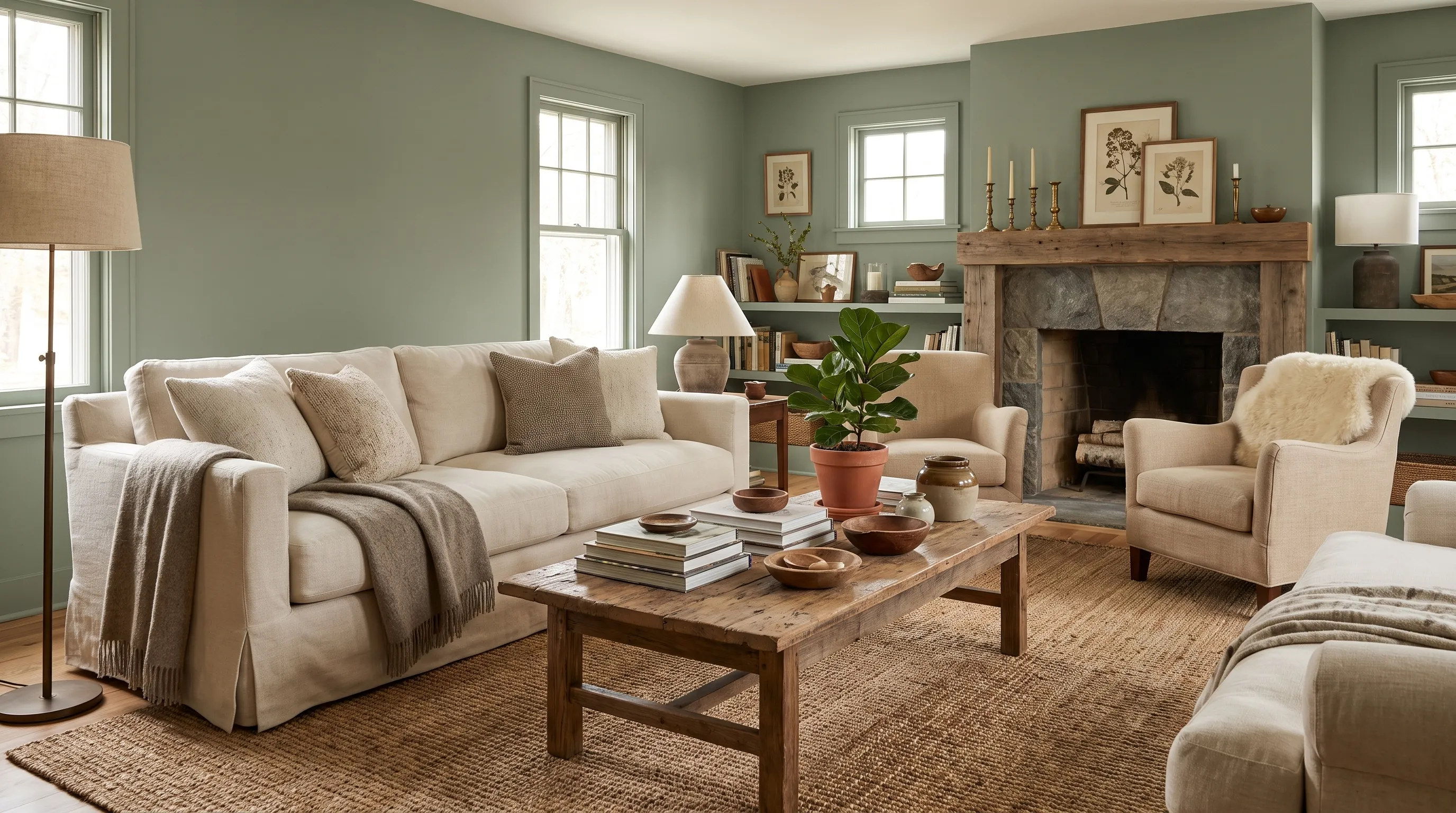
Saybrook Sage works especially well in a modern living room where natural materials and simple design elements create a balanced feel.
Wood furniture, linen upholstery, woven rugs, and soft textures bring out the earthy side of the green while adding warmth and comfort without making the space feel overly styled.
Used as the main wall color, Saybrook Sage creates a calming backdrop for a modern living room with layered textures, natural finishes, and pieces that add character over time.
2. Kitchens with Sage Green Cabinets
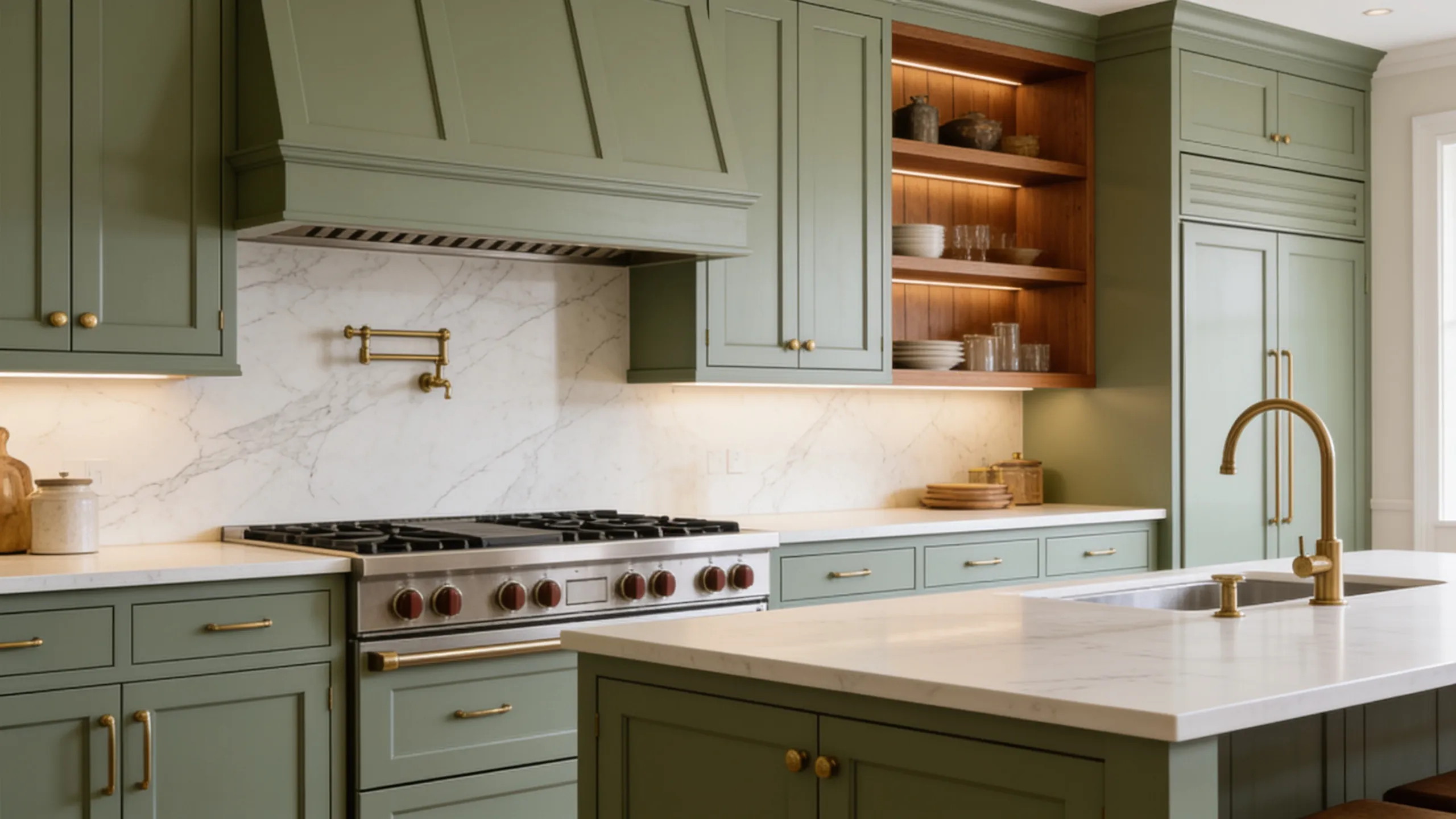
A kitchen is one of the places where Saybrook Sage can make a real impact. On islands or cabinets, it adds color while still keeping the space feeling timeless and easy to live with.
Pair it with white countertops, warm wood shelving, brass hardware, or a marble backsplash, and the green starts to feel balanced rather than trendy.
It gives the kitchen personality without taking over the entire room, and the right approach topainting kitchen cabinets can help this soft green finish look even more polished.
3. Bedrooms with a Softer Palette
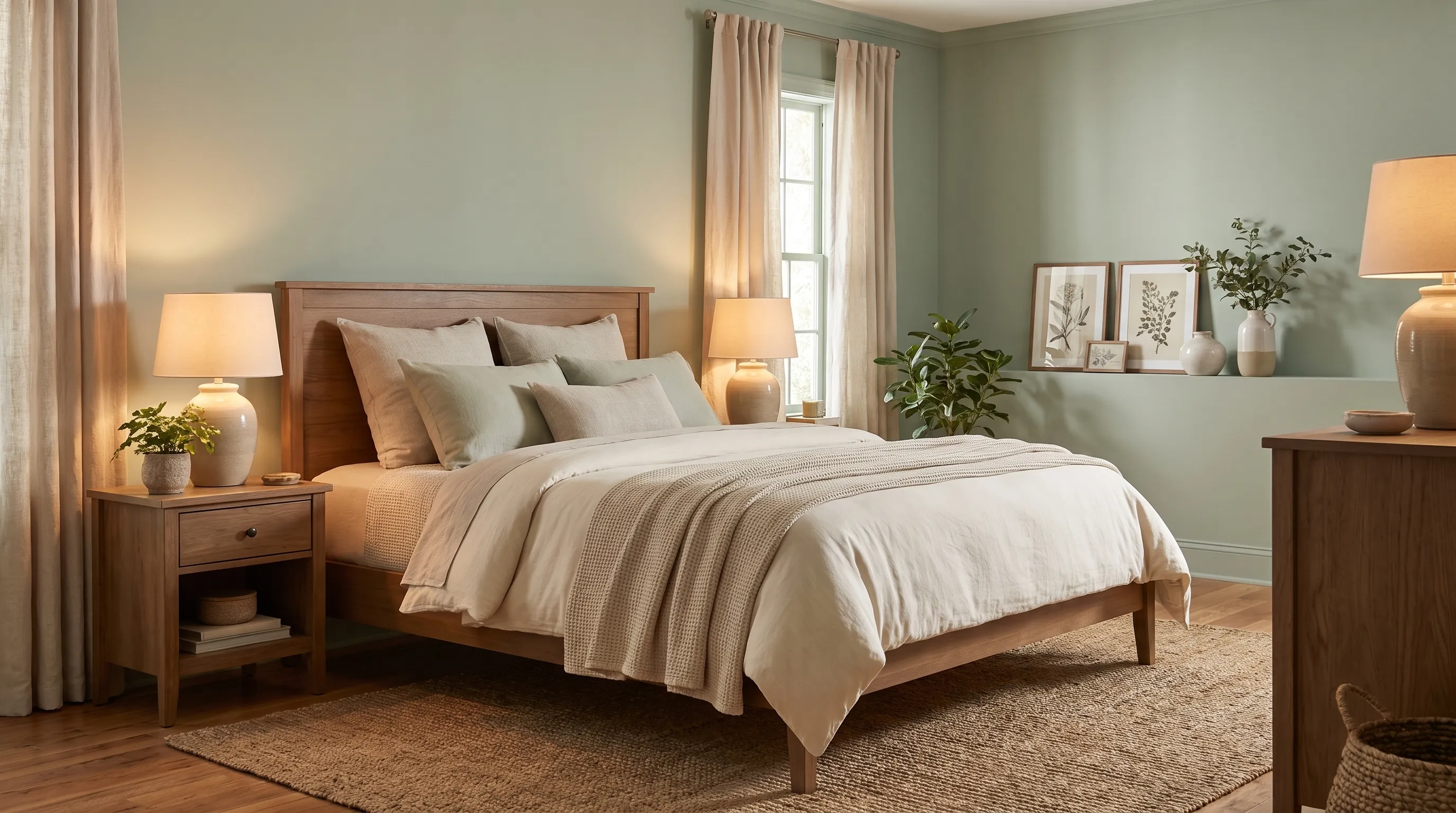
Bedrooms are a natural match for Saybrook Sage because the color has a quiet, calming quality. Neutral bedding, soft lighting, and natural fabrics like cotton or wool create a space that feels comfortable and settled.
It adds enough character to make the room interesting while still keeping the peaceful feeling you want in a place meant for rest.
4. Bathrooms and Smaller Spaces
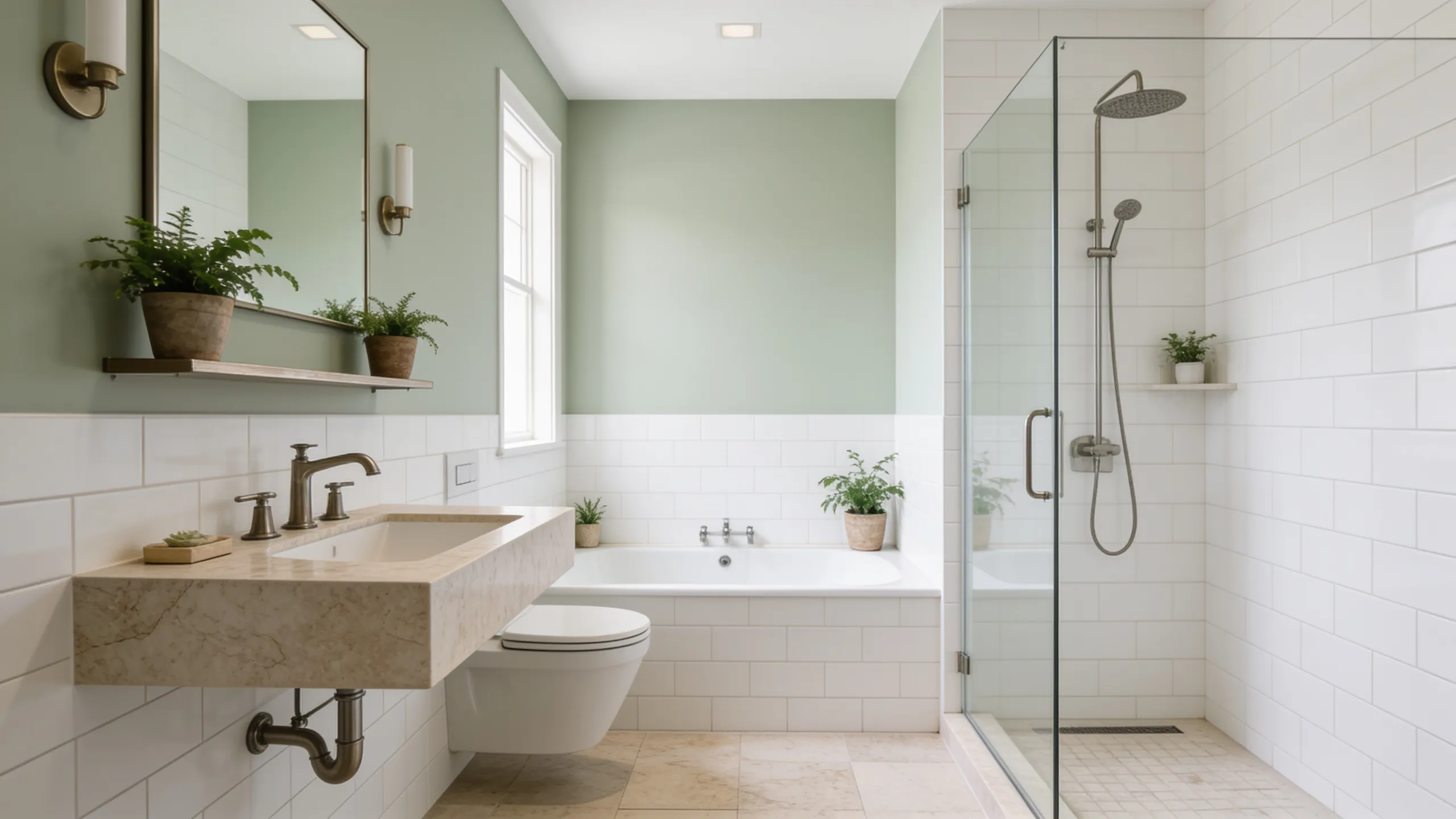
Saybrook Sage can be a beautiful choice for bathrooms, powder rooms, and entryways where you want a little more personality.
It pairs nicely with white tile, natural stone, and brushed metal finishes.
Smaller spaces are a great place to experiment with this shade because the color feels intentional without overwhelming the room. The result is fresh, inviting, and full of character.
Is Saybrook Sage Good for Exteriors?
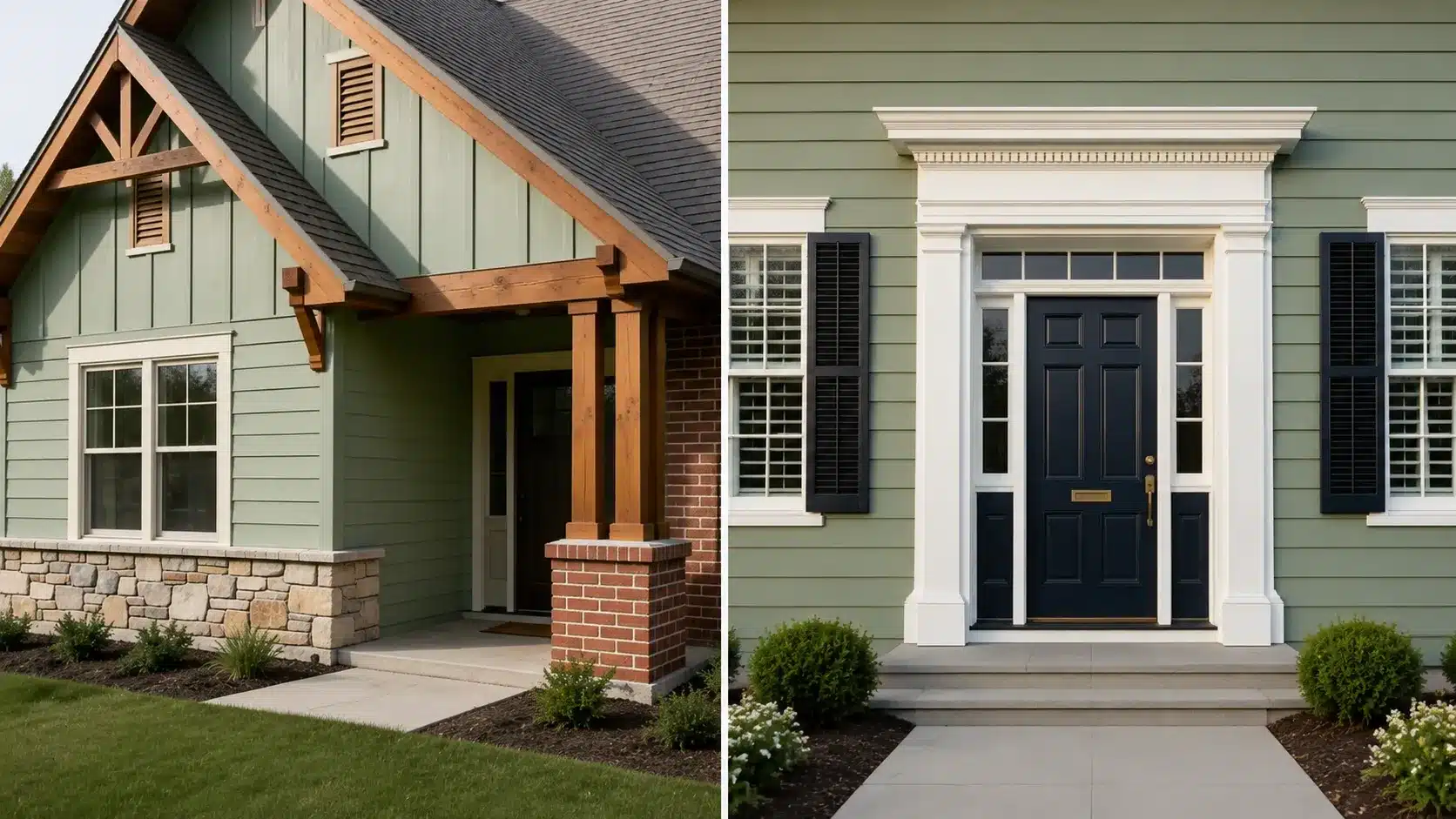
Painting a house green can feel like a big risk. Saybrook Sage offers a gentler way to try it. Its muted, gray-green quality reads as sophisticated rather than loud from the street.
Outdoor light changes throughout the day, so the color shifts slightly from morning to evening. That shift is part of what makes it feel connected to the surrounding landscape.
With natural materials like cedar shakes, stone foundations, and brick walkways, Saybrook Sage creates a cohesive exterior by enhancing its earthy, muted tones.
White trim can brighten the shade and create a classic look, while darker accents such as charcoal, black, or deep navy add contrast and depth without overpowering the soft green.
What Colors Pair Well with Saybrook Sage?
Saybrook Sage is flexible, but the surrounding colors determine whether it feels cozy, fresh, or dramatic.
The same green can feel softer with warm whites, more natural with earthy textures, or more dramatic with broader accents.
The good thing about this shade is that it already has a muted, balanced quality, so you do not need to fight against it. A few thoughtful choices can help bring out the side of Saybrook Sage that best fits your home.
Warm White Trim Colors
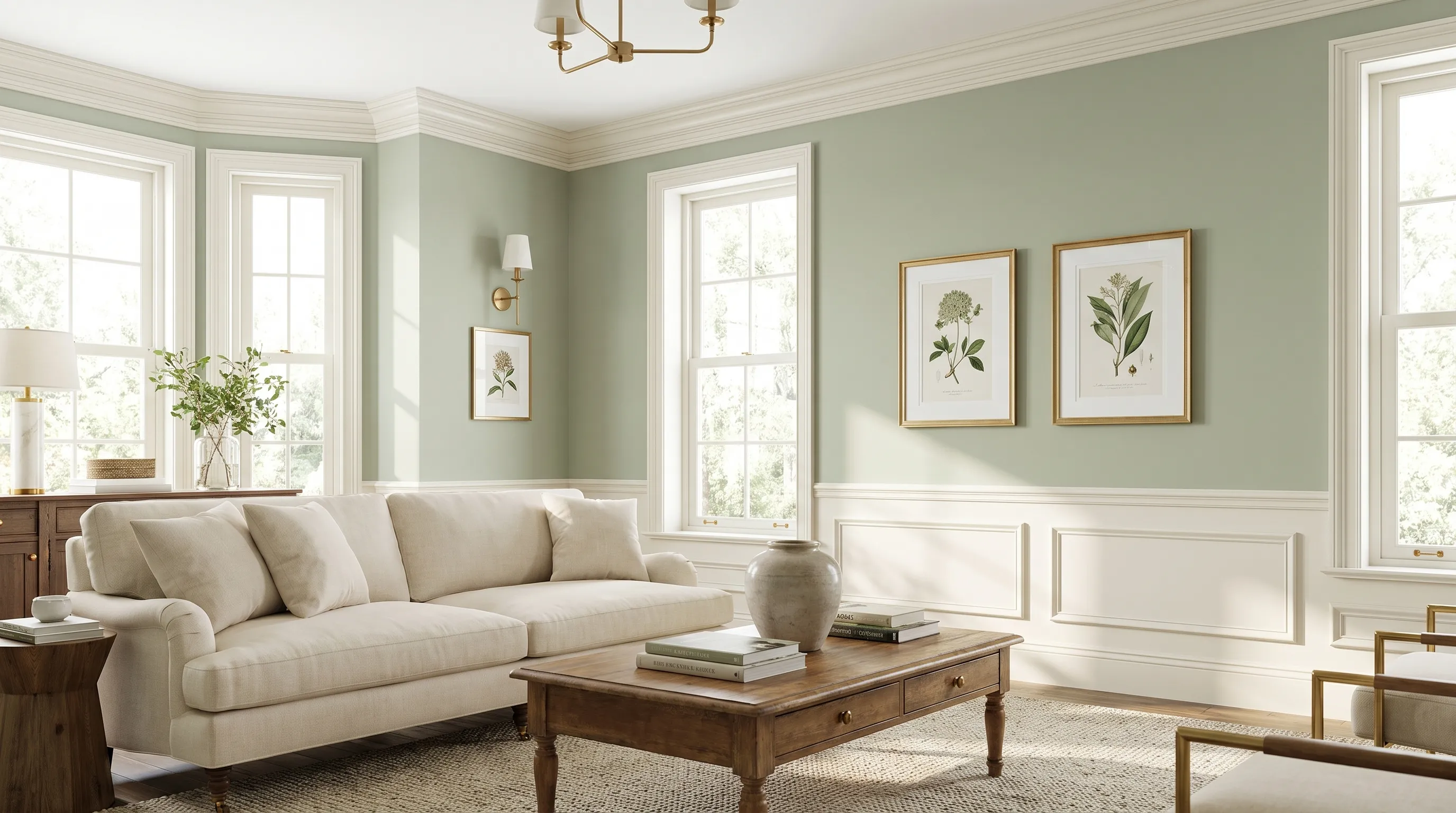
Warm whites are one of the easiest ways to make Saybrook Sage feel comfortable and inviting. Benjamin Moore White Dove creates a soft, classic contrast, while Simply White adds a little more brightness.
For a cleaner, sharper look, Chantilly Lace creates a crisp edge that works well in more modern spaces.
Beyond trim, these whites also work beautifully on ceilings, cabinets, and larger surfaces when you want the room to feel fresh without losing the green’s warmth.
Natural Materials and Earthy Tones
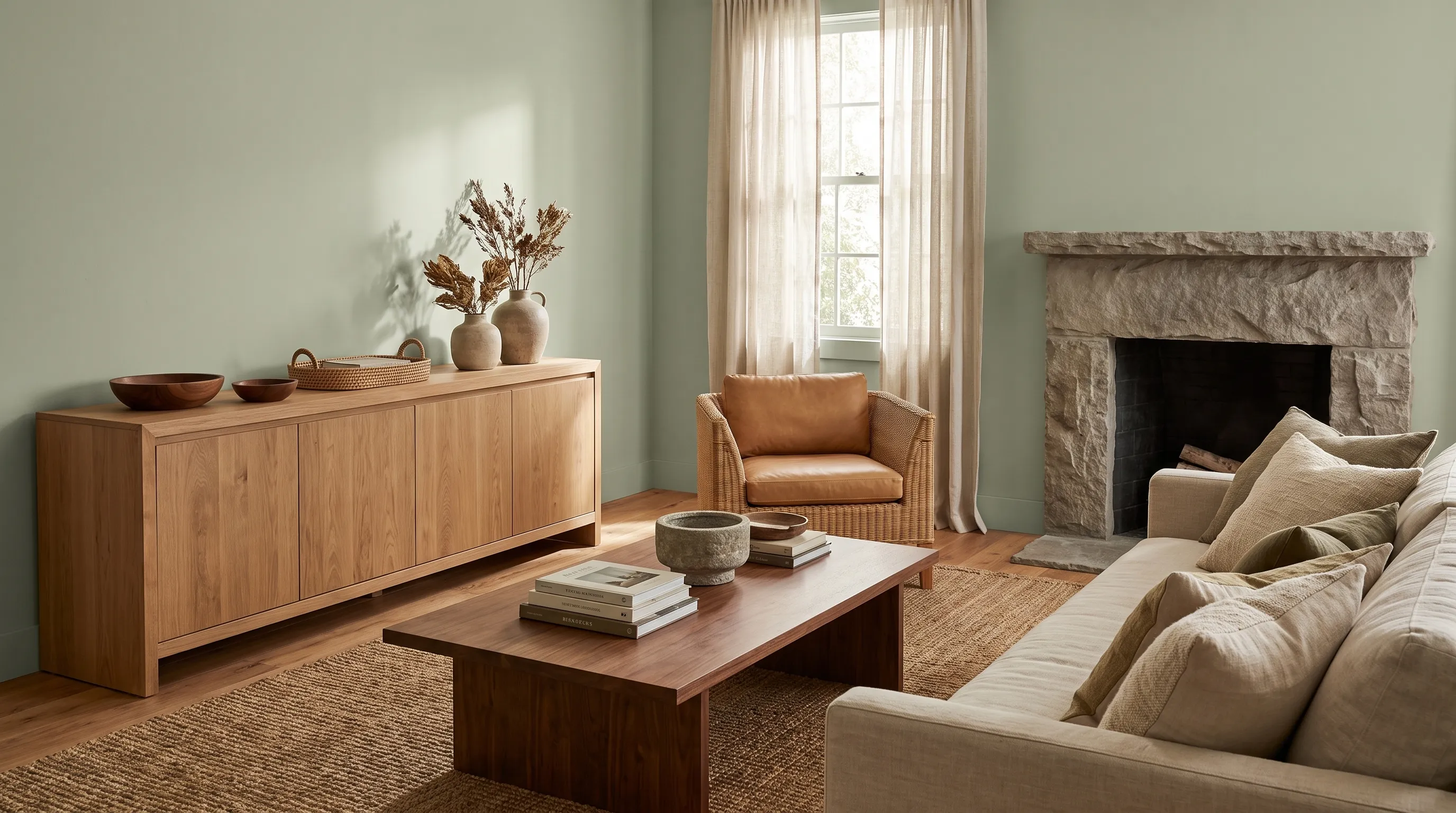
Saybrook Sage pairs naturally with materials that bring warmth and texture into a room. Oak, walnut, rattan, linen, leather, and stone all complement its earthy side and keep the space feeling grounded.
Decor colors like warm beige, soft tan, cream, and muted brown work especially well here. These tones help the green feel connected to nature while adding layers that make the room feel comfortable rather than flat.
Deeper Colors for Contrast
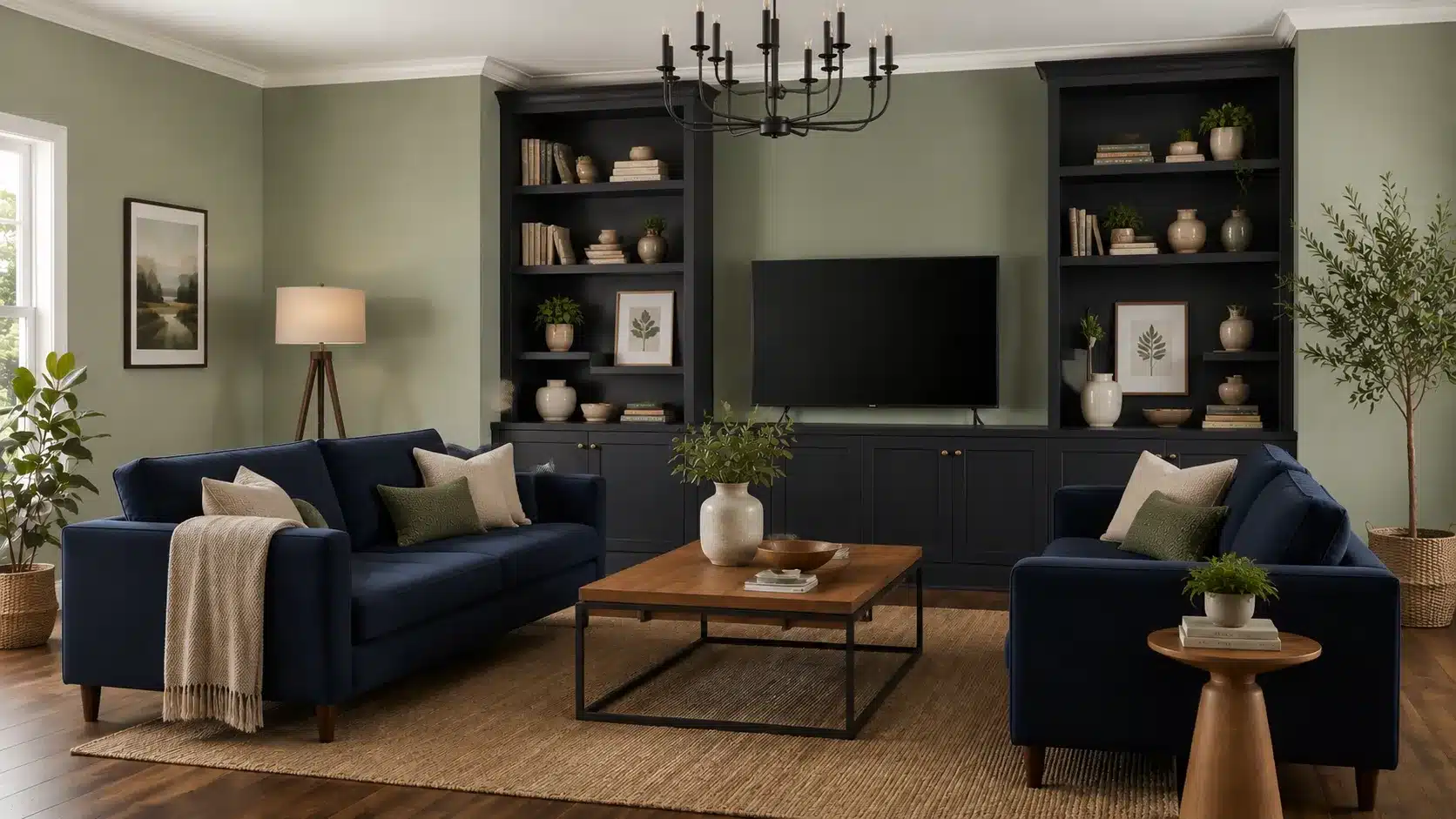
If you want Saybrook Sage to feel a little more dramatic, deeper colors can add beautiful contrast. Shades like Hale Navy, Kendall Charcoal, and Essex Green work well on doors, built-ins, furniture, or accent walls.
You can also bring in darker decor through charcoal seating, navy textiles, black metal accents, or deep wood finishes.
These richer elements add depth to the room while letting the softness of Saybrook Sage remain the foundation.
Saybrook Sage Compared to Other Benjamin Moore Greens
Choosing between sage greens can be tricky because many shades have a similar calm, nature-inspired feel. The small differences in undertones and depth are what make each one feel different once it is on your walls.
Saybrook Sage sits in a comfortable middle ground. It has enough color to add personality, but it stays muted enough for everyday spaces.
| Paint Color | LRV | Undertone | Overall Feel |
|---|---|---|---|
| October Mist | Lighter | Green with gray | Fresh, gentle, slightly cooler |
| Pale Smoke | Lighter | Gray with faint green | Airy, subtle, almost neutral |
| Healing Aloe | Similar range | Green with blue hints | Fresh, coastal, cooler |
Saybrook Sage and October Mist are close in feel, but October Mist is lighter and softer, while Saybrook Sage feels slightly warmer and more grounded.
Against lighter shades like Pale Smoke and Healing Aloe, it brings more warmth and earthy character.
Mistakes to Avoid When Using Saybrook Sage
Saybrook Sage is a fairly easy color to live with, but a few small choices can change how it feels in your home. Taking a little time before painting can help you avoid surprises once the color is on the wall.
The biggest mistake with Saybrook Sage is skipping the natural light test. A shade that feels perfect in the morning can tell a completely different story by evening.
It is also worth checking how it works with your existing floors, furniture, and trim. A white with the wrong undertone or too many competing green shades nearby can make the room feel less balanced.
A sample on your own wall, viewed at different times of day, will always tell you more than a paint chip ever could.
Is Saybrook Sage the Right Green for Your Home?
Saybrook Sage is a great choice if you want to bring color into your home without going too bold.
Its soft, muted quality works beautifully for nature-inspired spaces, homes with warm textures, and anyone looking for an alternative to traditional neutrals.
It may not be the right fit if you prefer a brighter green, a cooler modern shade, or a true neutral. Like any paint color, the final look depends on your lighting, finishes, and surroundings.
Before committing, test a sample on your own walls and watch how it changes throughout the day. The right color is the one that feels natural in your space.
Frequently Asked Questions
Is Benjamin Moore Saybrook Sage a Good Whole Home Color?
Yes, its muted quality makes it easy to carry through multiple rooms without feeling repetitive. It shifts slightly with different lighting, which keeps each room feeling distinct even with one shade throughout.
Does Saybrook Sage Work with Dark Wood Furniture?
Yes, dark wood tones like walnut bring out the warmth in Saybrook Sage. The pairing feels grounded and traditional rather than mismatched.
Is Saybrook Sage a Good Front Door Color?
Yes, Saybrook Sage can work beautifully as a front door color, especially on homes with natural stone, brick, or wood details. If you want stronger contrast, deeper shades like Hale Navy can create more impact.
What Flooring Looks Best with Saybrook Sage?
Light to medium wood floors pair especially well, since they echo the earthy quality in the paint. Natural stone tile also works nicely in bathrooms or entryways.