

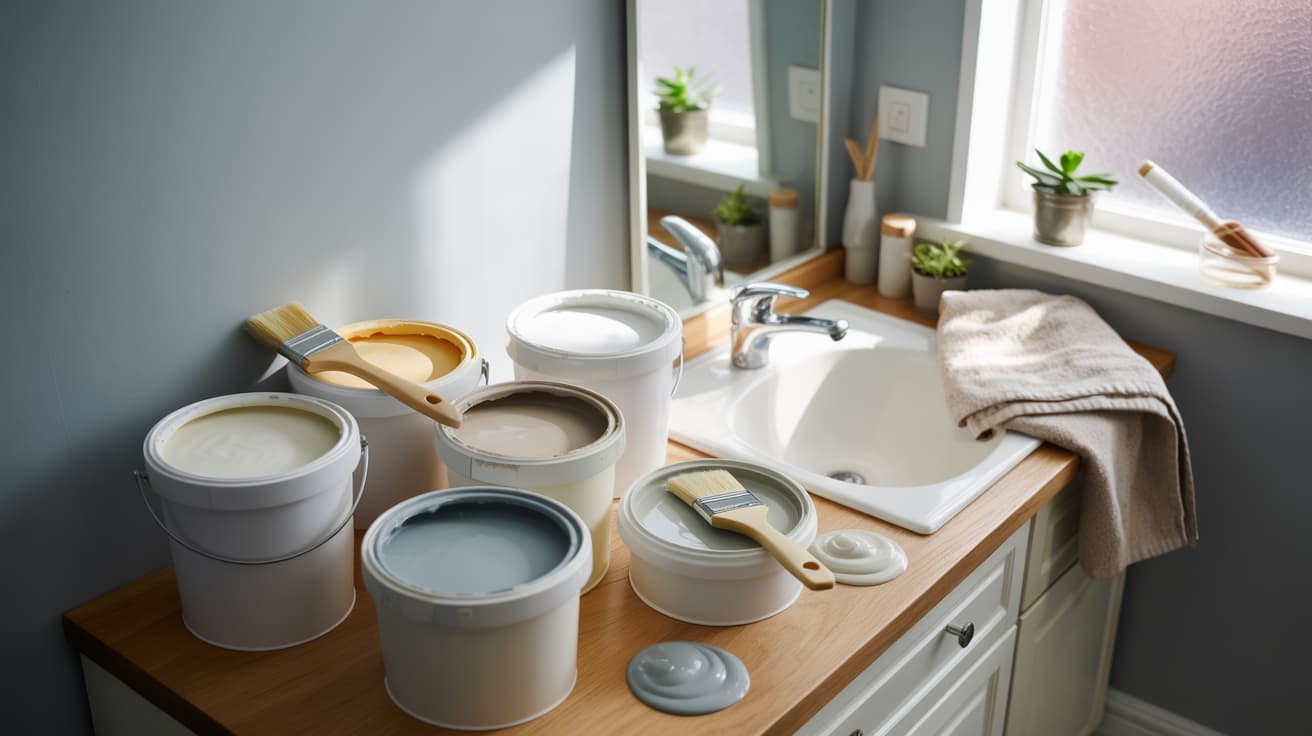


A small bathroom that feels cramped is rarely about the size of the room; it’s about the color on the walls.
Paint colors that make rooms look larger do exist, and I’ll be honest, picking the wrong one is genuinely easy to do when every chip on the rack looks completely different once it hits your wall.
What works in your bathroom depends on your lighting, your tile, and your ceiling height, not a universal rule written for a space that looks nothing like yours.
Paint names, finish recommendations, and ceiling color strategy are all ahead, organized by bathroom type, so everything you read actually applies to your situation, not just a generic renovation that looks nothing like yours.
Understanding How Paint Colors Affect Space
The eye doesn’t measure a room; it reads light. When a color reflects light back into the space, walls appear to push away from each other, and the room feels larger. When it absorbs light, the walls pull forward and the space contracts.
Light colors with a high Light Reflectance Value make walls appear to recede. For a windowless bathroom, stick to colors with an LRV of 65 or above.
A soft neutral like SW Natural Choice is a reliable option in this range, offering warmth without sacrificing reflectivity.
Dark colors aren’t automatically a problem. A deep navy on a single accent wall adds depth and makes the room feel longer.
A dark ceiling removes the hard visual edge that white creates, making the room read taller. Placement and lighting determine whether dark works, not the color itself.
Best Paint Colors to Make Your Small Bathroom Look Bigger
Not every paint color earns its place on a small bathroom wall. These Colors do, and here’s exactly why each one works.
1. Sherwin-Williams Alabaster (SW 7008)
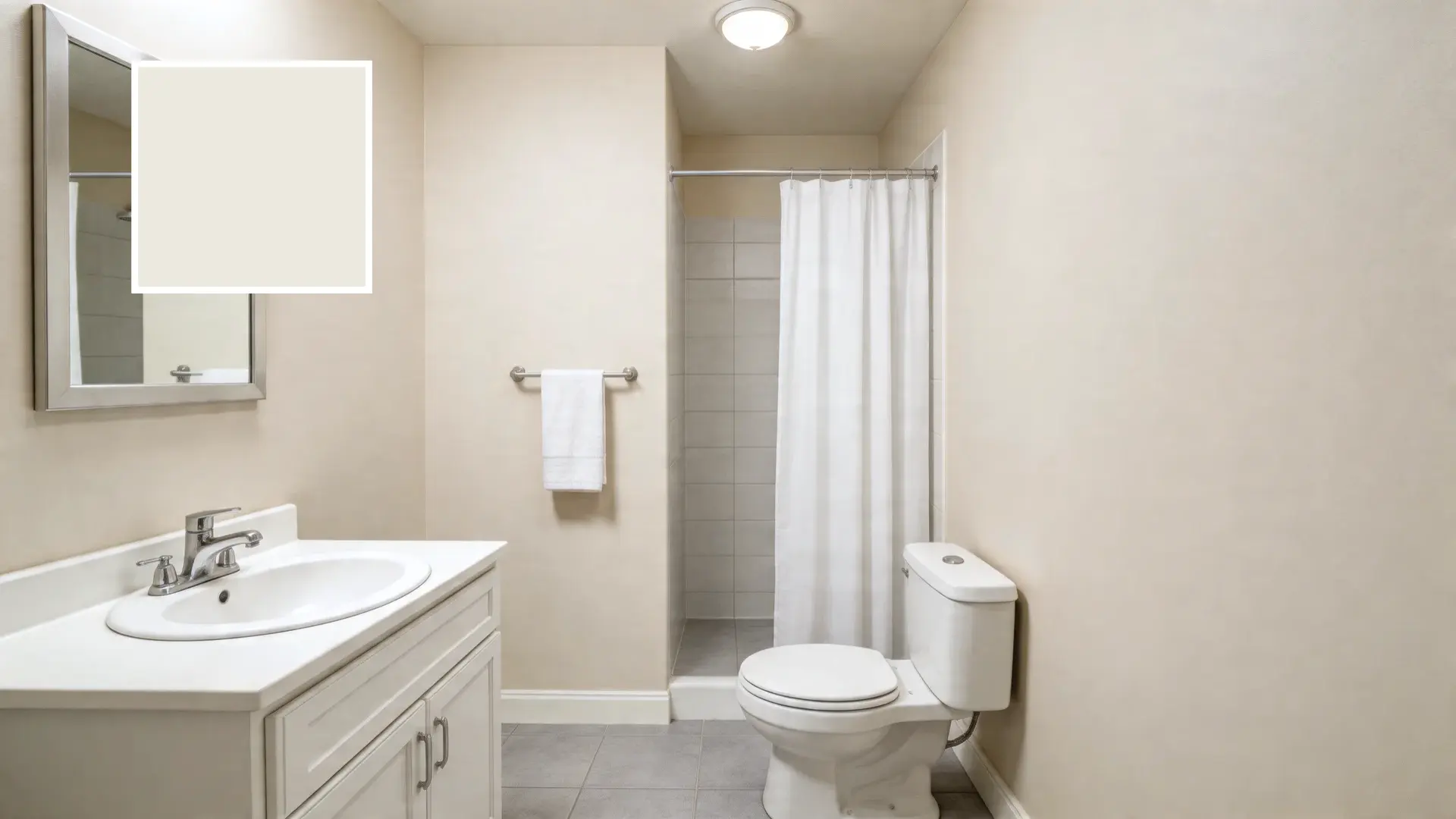
Alabaster sits in that rare category of whites that actually feel warm. Its creamy, yellow-leaning undertone pulls slightly toward yellow rather than toward blue or gray, so it never reads clinical or cold under artificial light.
In a small bathroom, that warmth does something useful; it makes the walls feel like a deliberate choice rather than a default. It reflects light generously, while the undertone stops it from feeling stark or exposed.
That same warmth is what connects it to the broader family of SW beige and greige tones, where depth and comfort sit closer together than most people expect.
- LRV: 82
- Hex Code: EDEAE0
- RGB: 237 , 234 , 224
2. Benjamin Moore Simply White (OC-17)
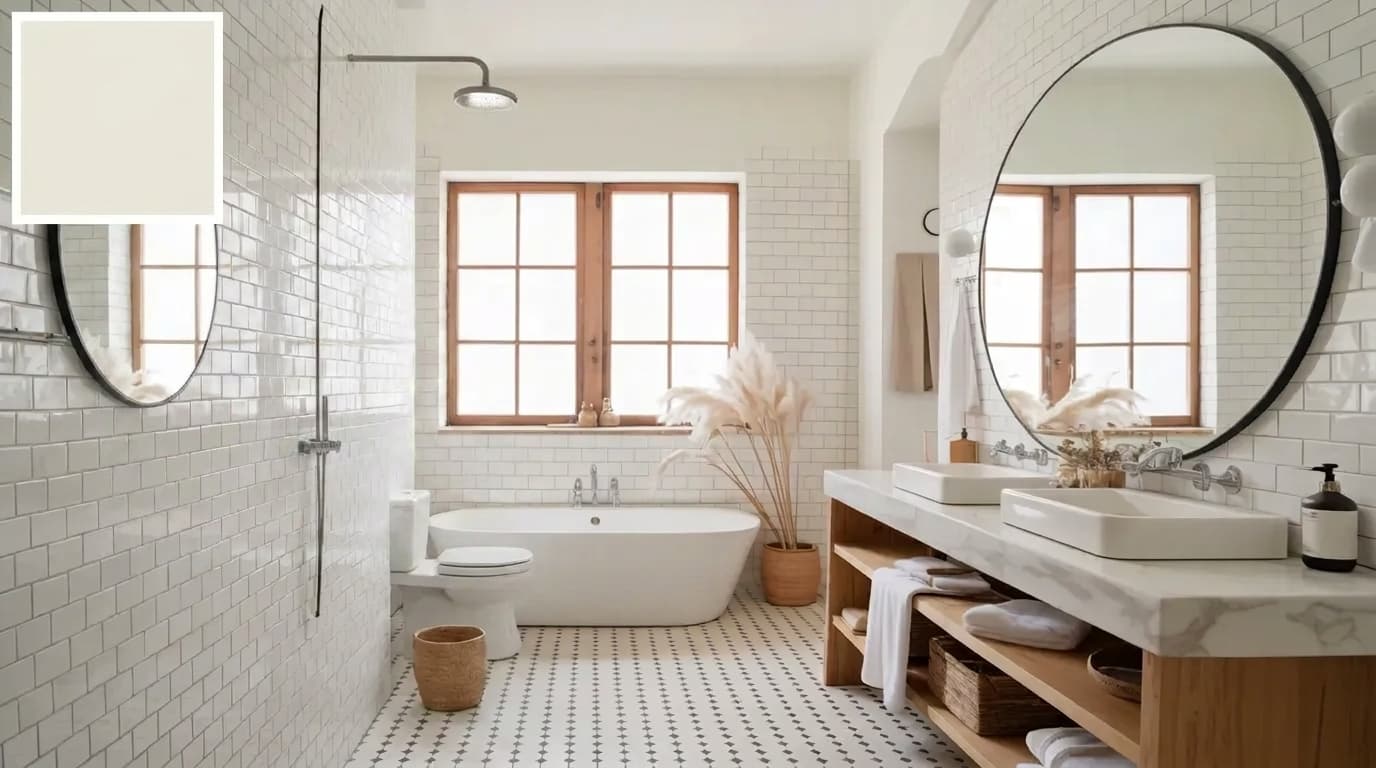
Simply White leans slightly warmer than most whites on the market, with a faint yellow-cream undertone that keeps it from tipping into stark territory. In a small bathroom, this undertone is what makes the difference; it prevents the harsh brightness that pure whites create under overhead lighting.
The walls feel illuminated rather than bleached. It adapts well to both natural and artificial light, making it one of the most consistently reliable whites for compact spaces, regardless of window placement.
- LRV: 89.52
- Hex Code: F1EDE2
- RGB: 241, 237, 226
3. Sherwin-Williams Agreeable Gray (SW 7029)
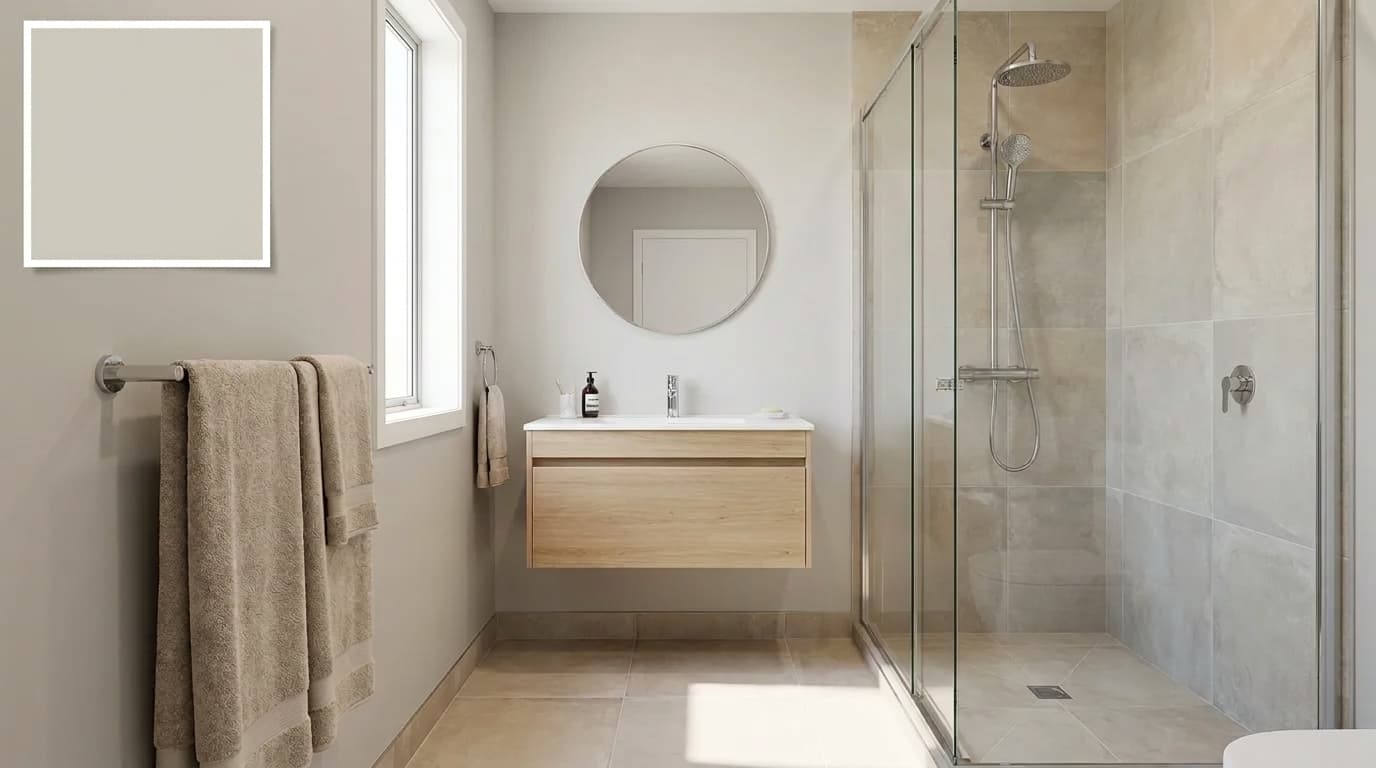
Agreeable Gray carries a warm beige Gray undertone beneath its gray surface, which is exactly why it photographs so differently from room to room. In a small bathroom with warm-toned bulbs, it leans toward greige. In natural light, it reads as a clean, soft gray.
That adaptability is its strength. At LRV 60, it sits right at the threshold where a color reflects enough light to keep walls receding without losing the depth that makes a room feel considered rather than cautious.
- LRV: 60
- Hex Code: D1CBC1
- RGB: 203 , 209 , 193
4. Benjamin Moore Pale Oak (OC-20)
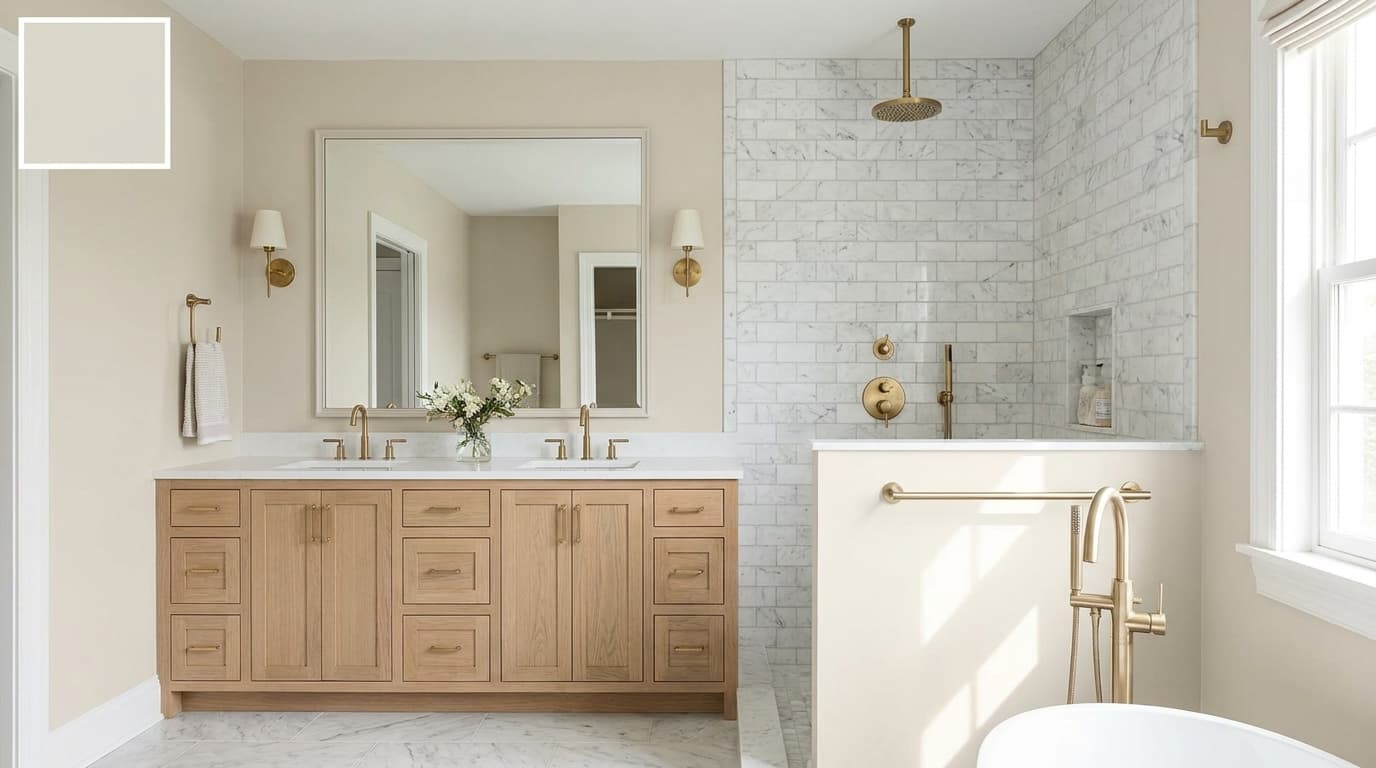
Pale Oak carries a sandy, warm undertone with faint pink notes that surface in certain light, particularly in the late afternoon or under warm bulbs.
It reads closer to a blush greige than a traditional beige, which gives it a softness that works well in small bathrooms where you want warmth without visual weight.
Against brass or unlacquered bronze fixtures, those pink undertones become quietly intentional. Against white tile, it adds just enough color contrast to make the room feel layered rather than flat.
- LRV: 68.64
- Hex Code: DDD9CE
- RGB: 221, 217, 206
5. Sherwin-Williams Window Pane (SW 6210)
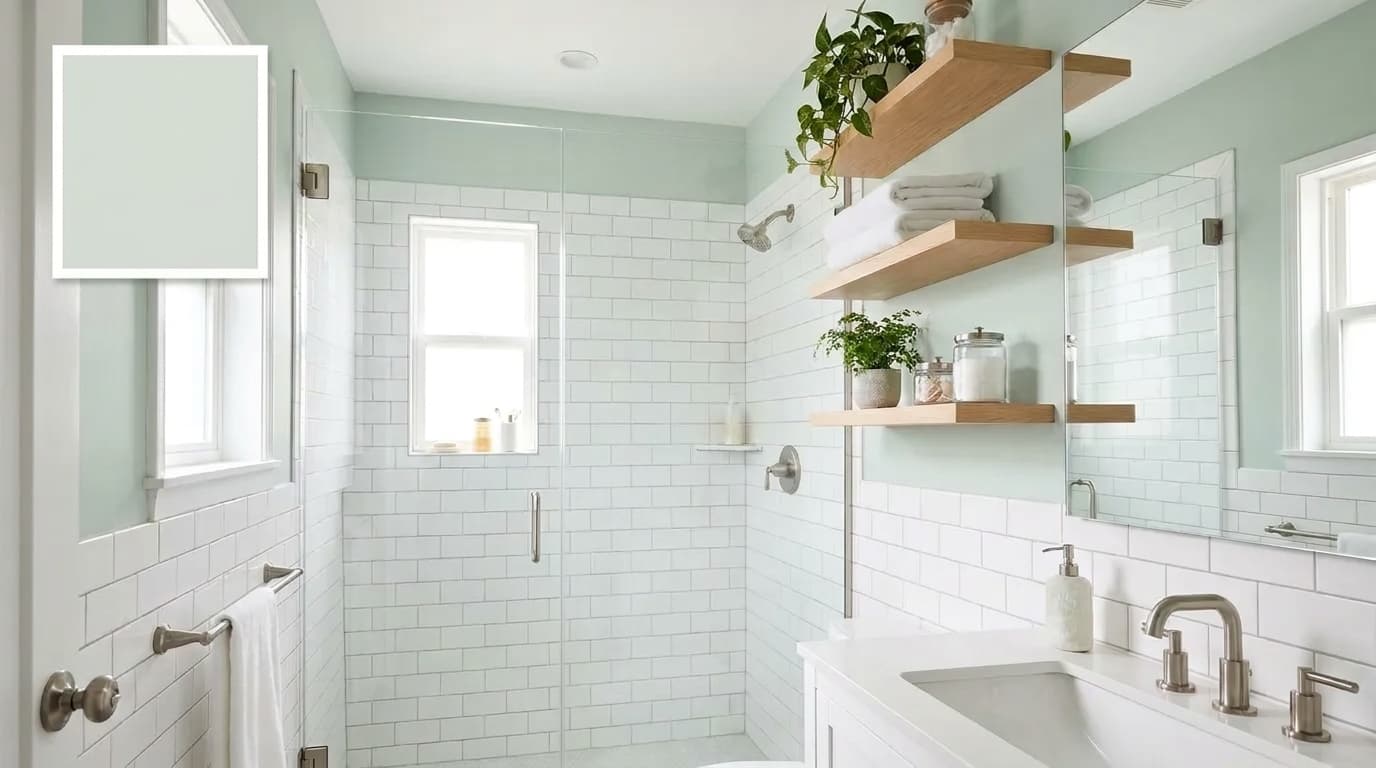
Window Pane is a pale aqua with a blue-green undertone that leans toward green rather than blue in most lighting conditions. In a small bathroom, that green base keeps it from reading too cold or nautical; it feels more like a soft mineral tone than a traditional bathroom blue.
Its higher LRV means it reflects light well, and the cool undertone creates the spatial recession effect that makes walls appear to push back. It adds personality without making the room feel decorated.
- LRV: 72
- Hex Code: D7E1DA
- RGB: 215, 225, 218
6. Benjamin Moore White Dove (OC-17)
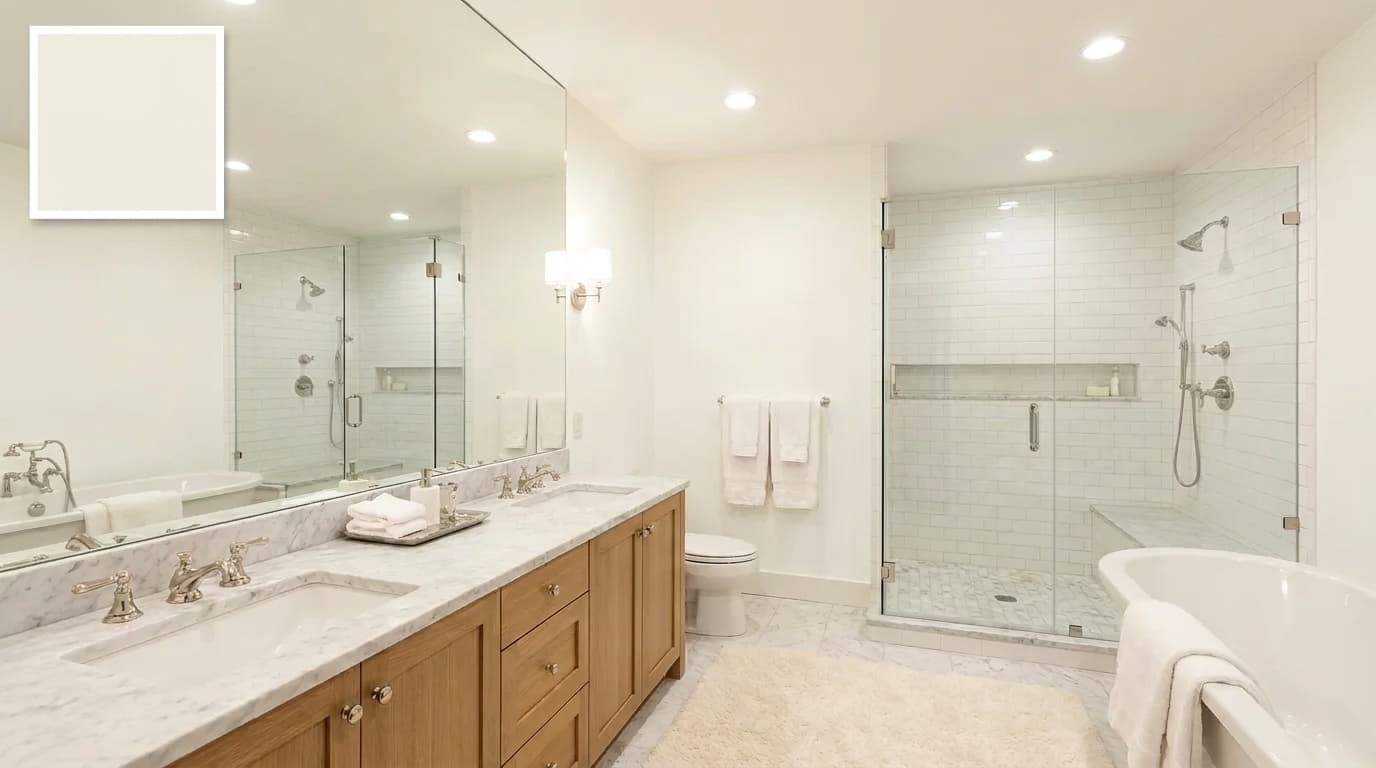
White Dove has a soft, gray-white base with a faint warm undertone, keeping it dimensional rather than flat. It sits a step below pure white on the brightness scale, which is exactly what makes it work in small bathrooms; it reflects light without the overexposed quality that brighter whites can create.
Under warm overhead lighting, it reads as a clean, slightly creamy white. In natural light, it pulls slightly cooler. That range of behavior makes it one of the most consistent performers in windowless spaces.
- LRV: 83.16
- Hex Code: F0EEE4
- RGB: 240, 238, 228
7. Farrow & Ball Borrowed Light (No. 235)
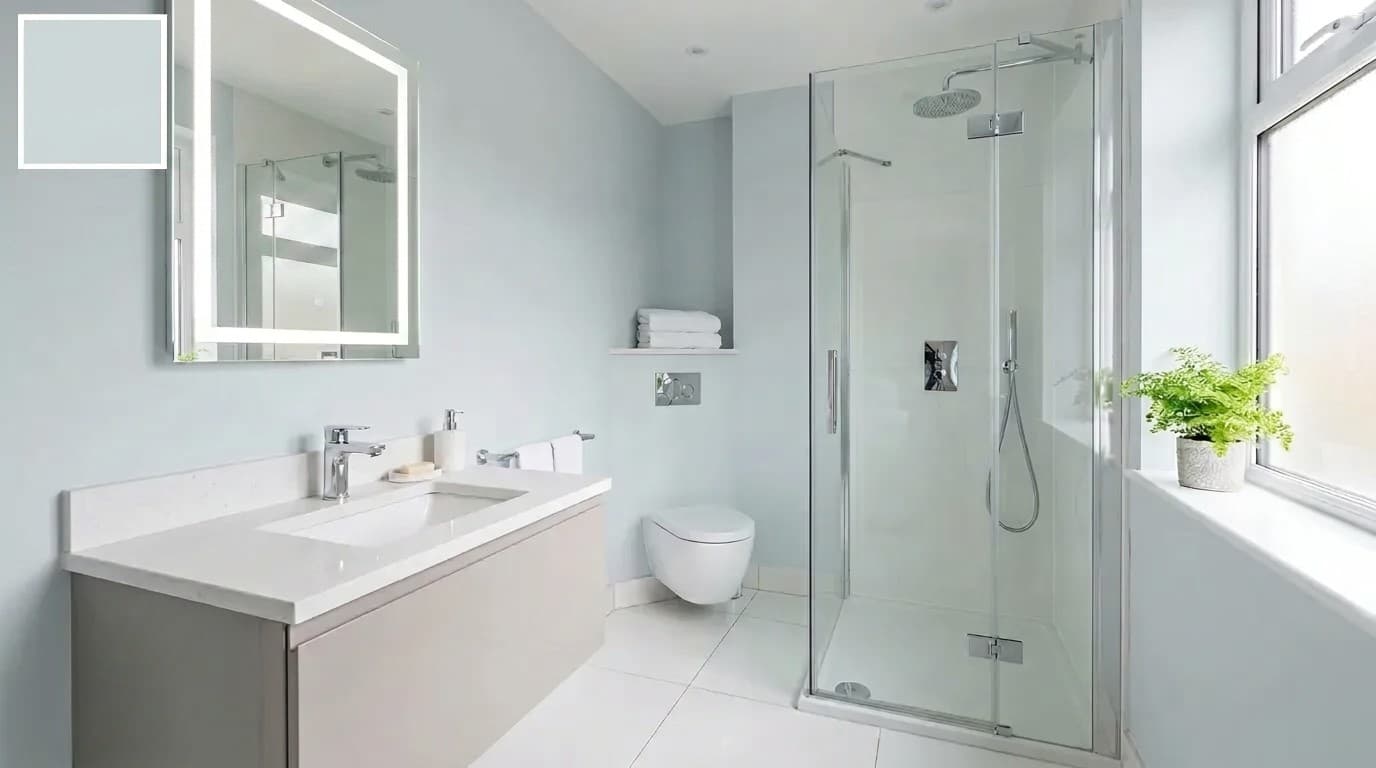
Borrowed Light has a pale, watery blue undertone with gray mixed in that prevents it from reading as a primary color. In strong natural light, it appears almost white with a blue suggestion. In lower light, the blue deepens slightly into a soft, cool gray.
That shift makes it well-suited to small bathrooms; it behaves differently at different times of day, which keeps the room from feeling static.
- LRV: 67
- Hex Code: DCE5E3
- RGB: 220, 229, 227
8. Sherwin-Williams Evergreen Fog (SW 9130)
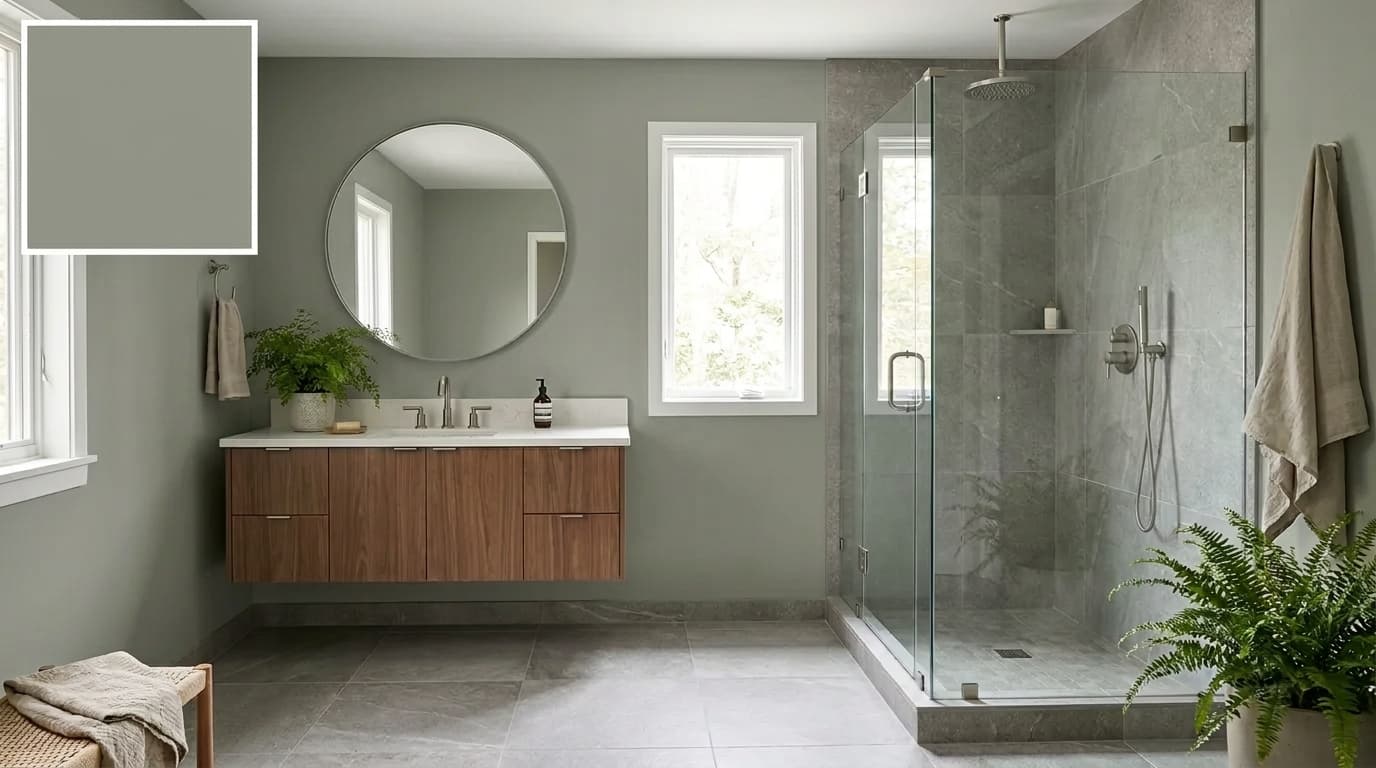
Evergreen Fog is a muted sage with equal parts green and gray in its base, which stops it from reading either too earthy or too cold. In daylight, the green surfaces and the room feel fresh. Under evening lighting, the gray takes over, and the room settles into something warmer and more grounded.
For a small primary bathroom with natural light, this dual behavior is an asset. The muted quality of the green keeps the walls from advancing toward you; it recedes in a way that brighter, more saturated greens do not.
- LRV: 30
- Hex Code: 95978A
- RGB: 149, 151, 138
9. Benjamin Moore Balboa Mist (OC-27)
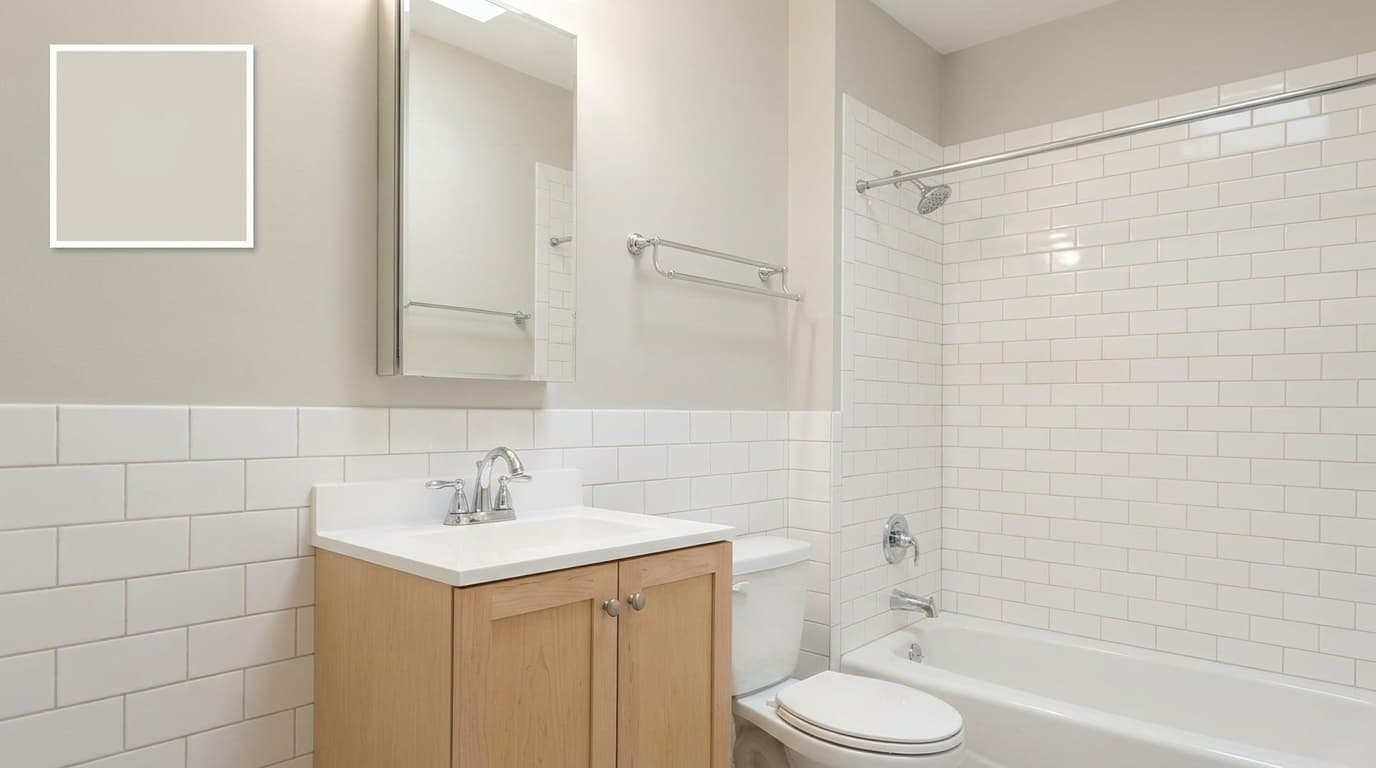
Balboa Mist sits in a narrow space between white and greige, light enough to reflect well, warm enough to add depth. Its undertone is a soft combination of beige and gray, with no strong lean in either direction, making it unusually forgiving across different tile colors and fixture finishes.
In a small bathroom, that neutrality is a practical advantage. It doesn’t fight with anything already in the room. The walls recede quietly, the space feels open, and the color demands no attention.
- LRV: 67.37
- Hex Code: D9D2C4
- RGB: 217, 210, 196
10. Sherwin-Williams Sea Salt (SW 6204)
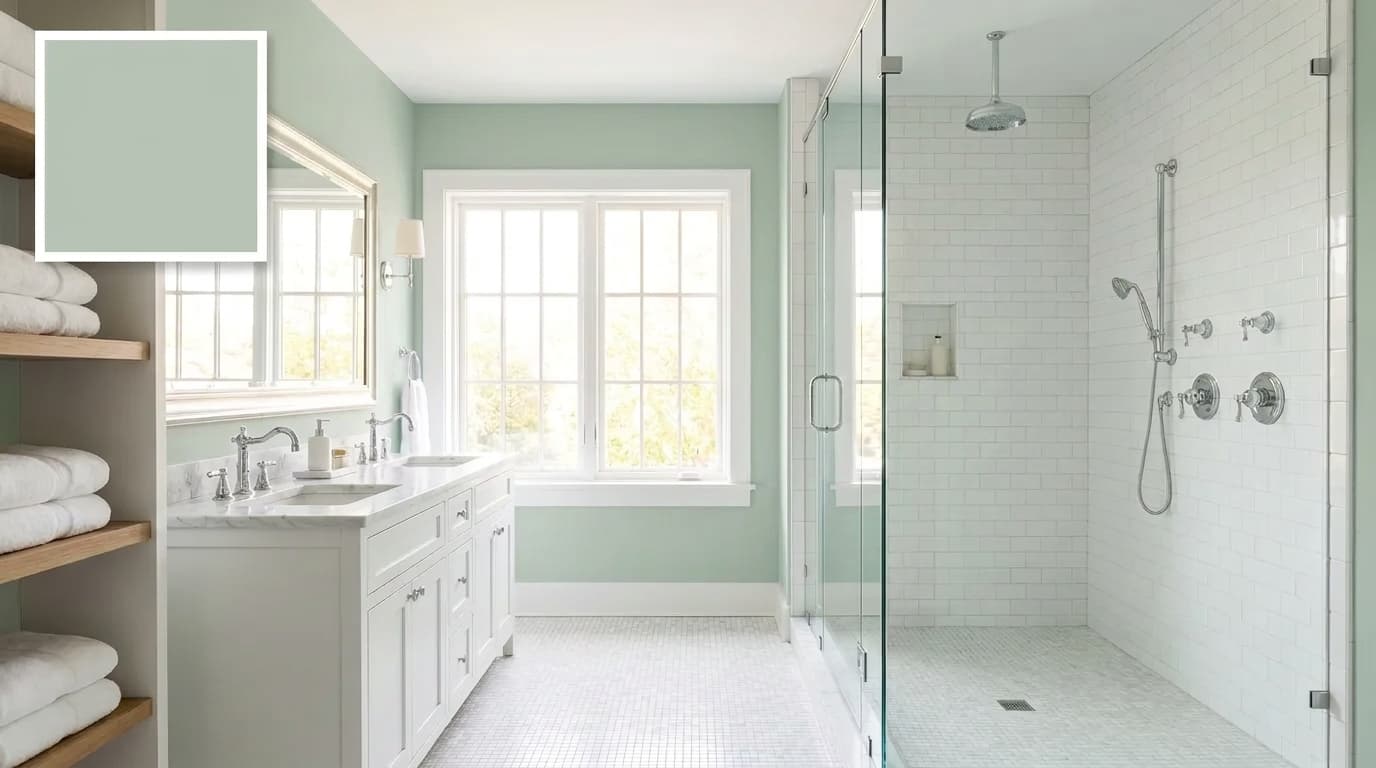
Sea Salt has a blue-green base with a gray undertone, softening it into something closer to a coastal neutral than a true color. In natural light, the blue reads more clearly, and the room feels fresh and open. Under warm artificial light, the gray takes over, pulling toward a soft sage.
That behavioral range makes it one of the most versatile colors on this list. In a small bathroom, the cool base creates a sense of spatial recession.
- LRV: 63
- Hex Code: CBD4CF
- RGB: 203, 212, 207
11. Benjamin Moore Sea Dream (2039-60)
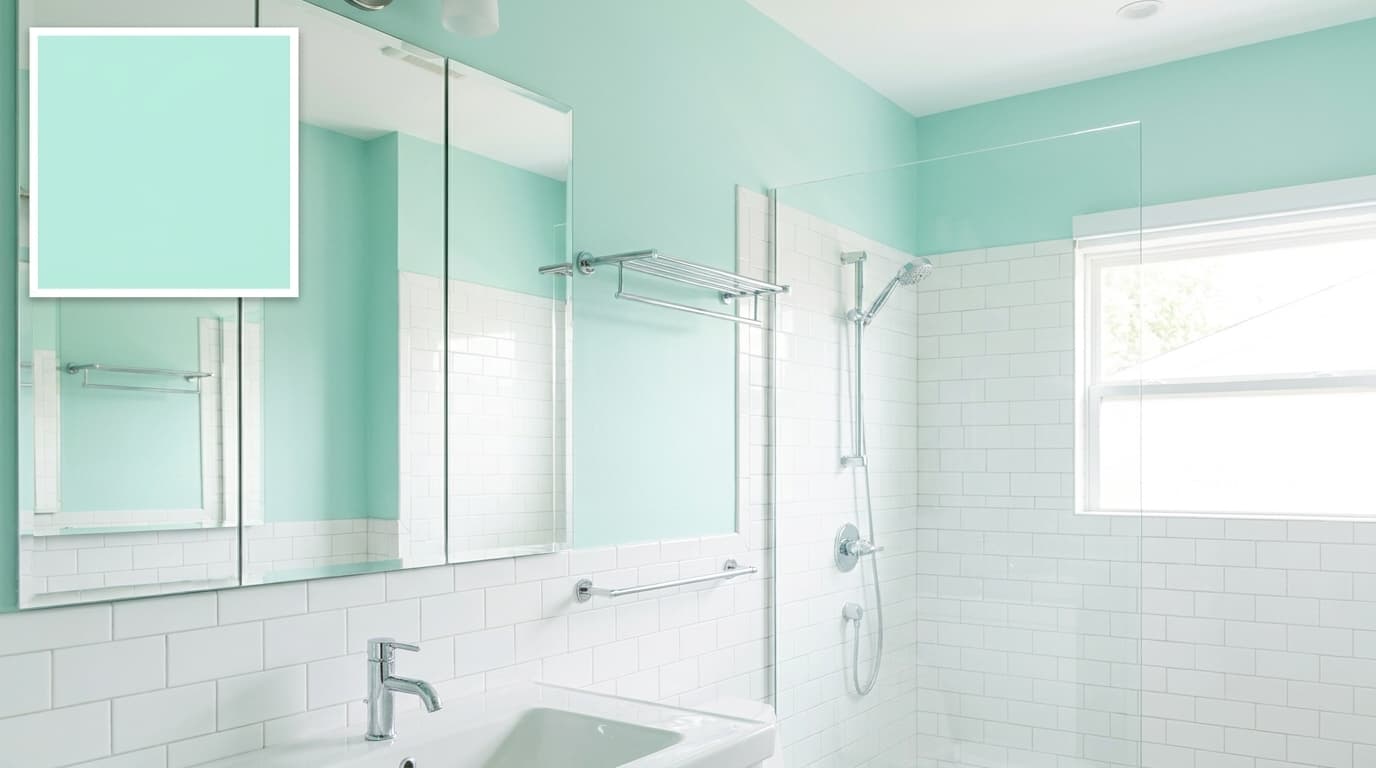
Seadream has a clean, cool blue-green undertone with very little gray, making it one of the more saturated options on this list despite its lightness. In a small bathroom with white tile and chrome fixtures, that clarity reads as fresh and deliberate.
The cool undertone visually pushes the walls back, and the higher LRV keeps the room bright. It works best in bathrooms with at least some natural light.
- LRV: 74.61
- Hex Code: BFDCD8
- RGB: 191, 220, 216
12. Farrow & Ball Mizzle (No. 266)
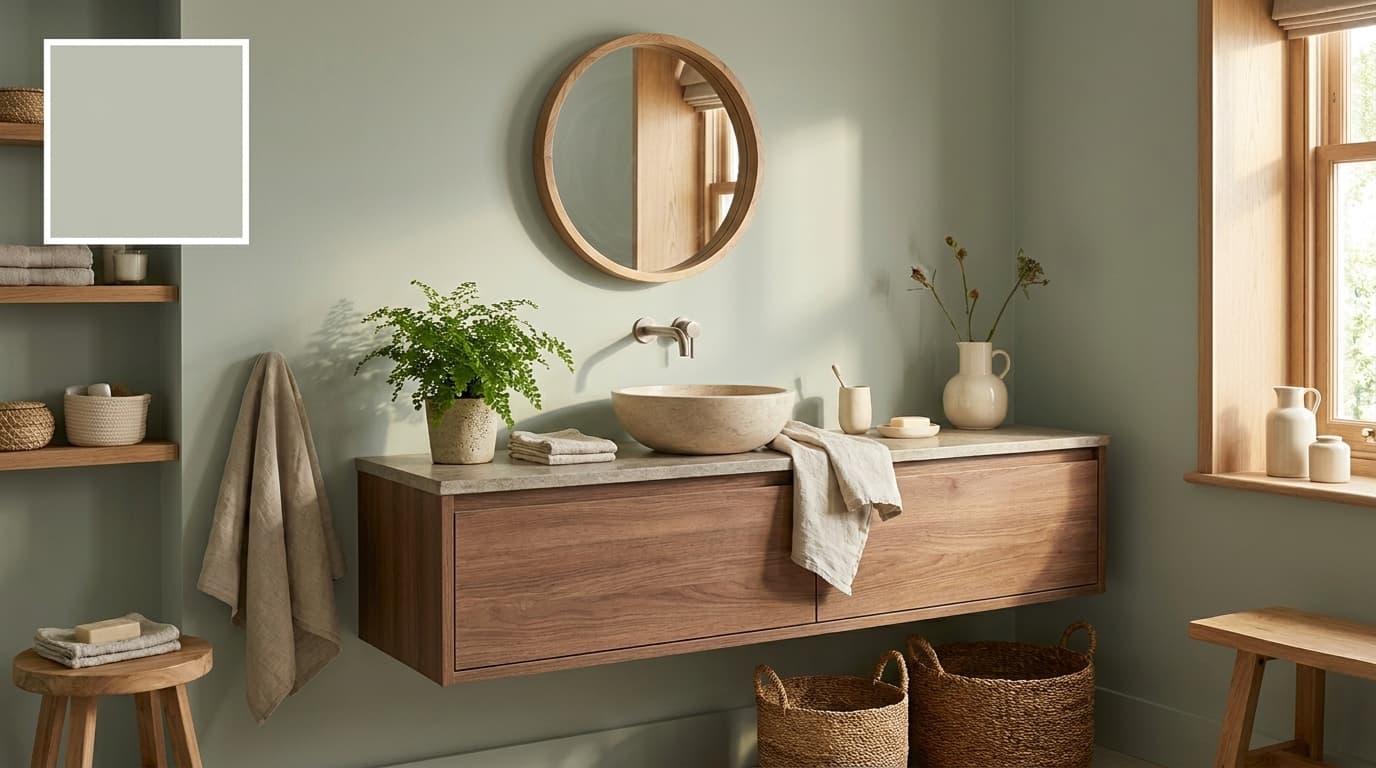
Mizzle is one of the more complex colors on this list, a green base with brown, gray, and yellow undertones that shift dramatically with the light source. In morning natural light, it reads as a warm, mossy green. In the evening under warm bulbs, it pulls toward an earthy olive.
The muted, low-saturation quality of the green makes it recede rather than advance, and the shifting undertones keep the room from ever looking the same twice.
- LRV: 68
- Hex Code: C9C7B8
- RGB: 201, 199, 184
13. Sherwin-Williams Comfort Gray (SW 6205)
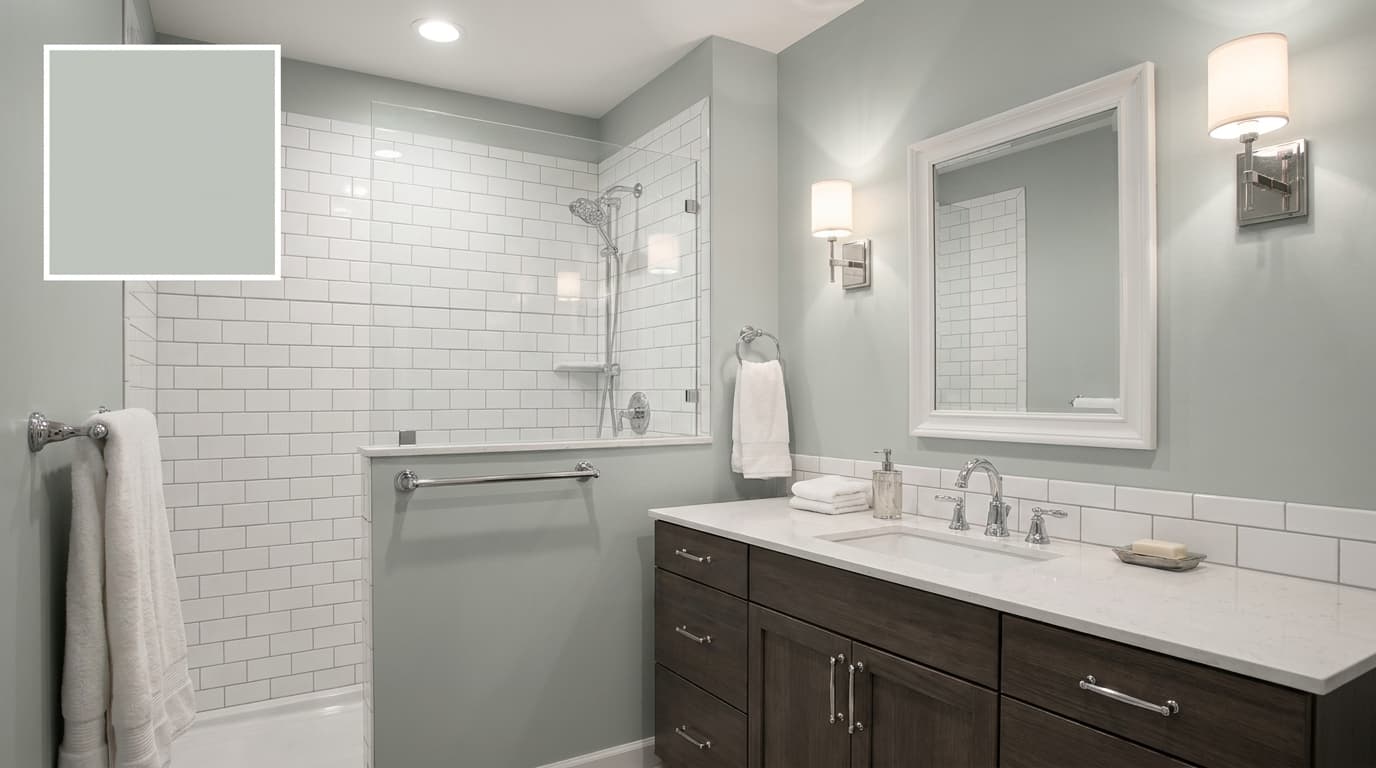
Comfort Gray sits in the same blue-green family as Sea Salt but with a stronger gray presence that grounds it more firmly. The blue undertone is subtle enough that it doesn’t read as a color statement; it reads as a very sophisticated neutral with just enough cool depth to keep walls receding.
In a small bathroom with matte black fixtures and white subway tile, the gray base pulls everything together without competing. It reflects light well and behaves consistently across different lighting conditions, making it a reliable choice for bathrooms.
- LRV: 54
- Hex Code: B5C0B9
- RGB: 181, 192, 185
14. Benjamin Moore Pale Moon (OC-108)
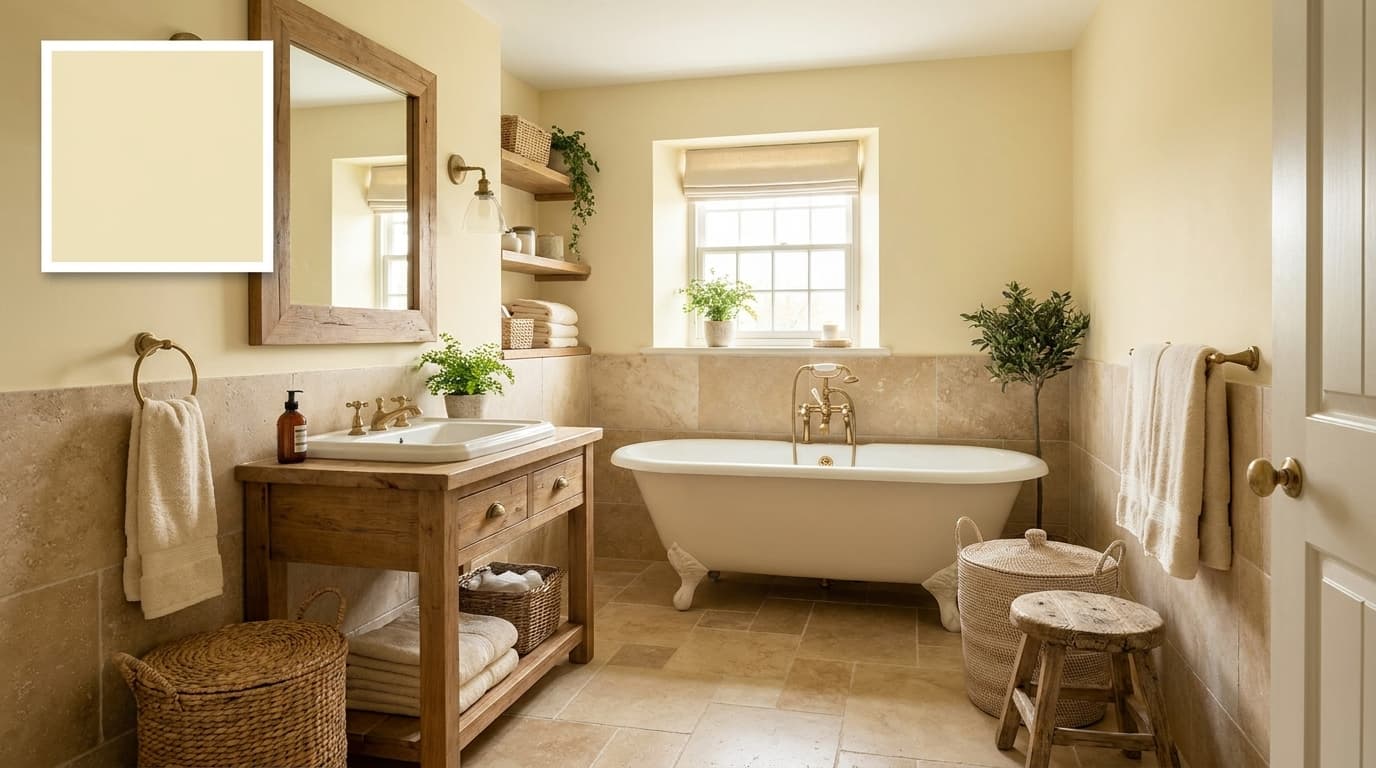
Pale Moon has a warm, ivory-adjacent undertone with faint yellow notes that surface in lower light, which is exactly what makes it work in basement bathrooms or spaces with limited windows. Most light colors appear cold or gray in low-light conditions.
Pale Moon’s warmth compensates, keeping the room feeling inhabited rather than dim. The walls reflect light softly rather than aggressively, and the yellow undertone adds a quiet coziness without making the space feel heavy.
- LRV: 77.98
- Hex Code: F1E6C8
- RGB: 241, 230, 200
15. Sherwin-Williams Zurich White (SW 7626)
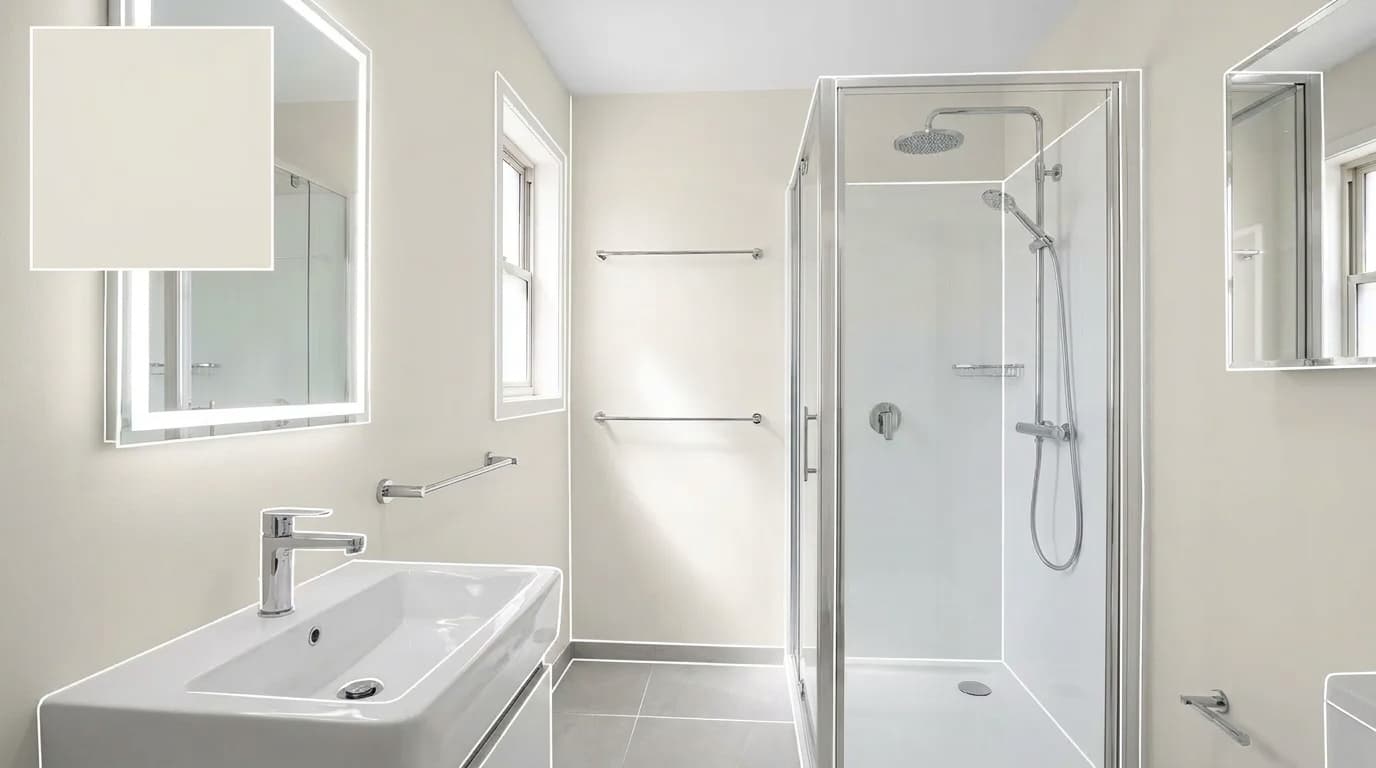
Zurich White occupies the space between a true white and a greige; it has a barely warm undertone that keeps it from reading as stark, but not enough warmth to categorize it as beige. That in-between quality is its most useful characteristic in a small bathroom.
It doesn’t lean strongly toward warm or cool, which means it works well with almost any tile color or fixture finish without clashing. Walls reflect light cleanly.
- LRV: 75
- Hex Code: E8E0D5
- RGB: 232, 224, 213
16. Benjamin Moore Revere Pewter (HC-172)
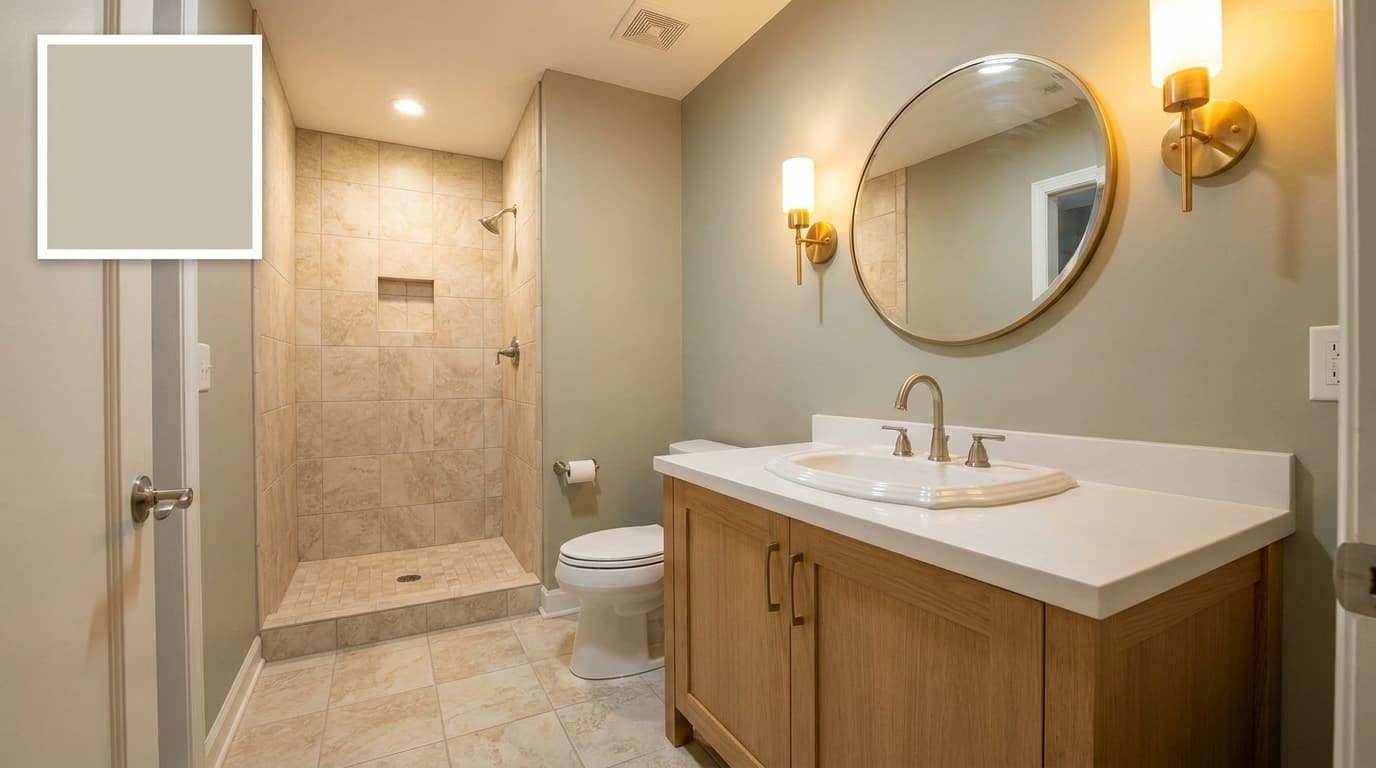
Revere Pewter has a warm gray base with green and brown undertones, making it one of the most light-sensitive colors on this list. In strong natural light, it reads as a clean, medium gray. In lower light or under warm bulbs, those brown undertones surface, and the color pulls noticeably darker.
In a small bathroom, this means placement matters; with good natural light, it adds sophistication and depth without closing the room in. Without it, the color can work against the space.
- LRV: 55.51
- Hex Code: CBC3B4
- RGB: 203, 195, 180
17. Farrow & Ball Pale Powder (No. 204)
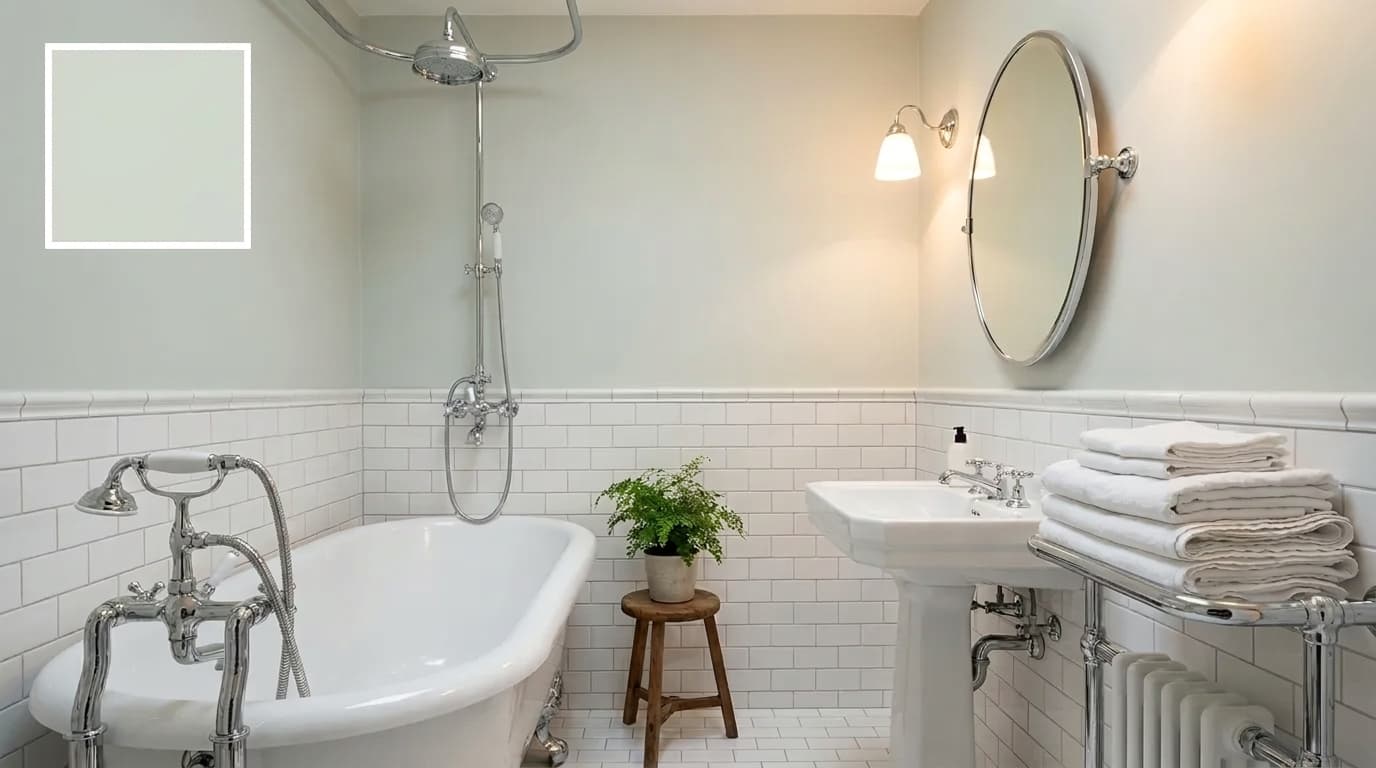
Pale Powder has a dusty, blue-green undertone with enough gray mixed in to keep it from reading as a color statement. It sits in a quiet register, the kind of color that’s hard to name precisely, which is part of what makes it so effective in a small bathroom.
The eye doesn’t land on it and think “blue” or “green”; it just reads as light, slightly cool, and unusually serene. That ambiguity keeps walls from advancing.
- LRV: 72
- Hex Code: D9E4DF
- RGB: 217, 228, 223
18. Sherwin-Williams Accessible Beige (SW 7036)
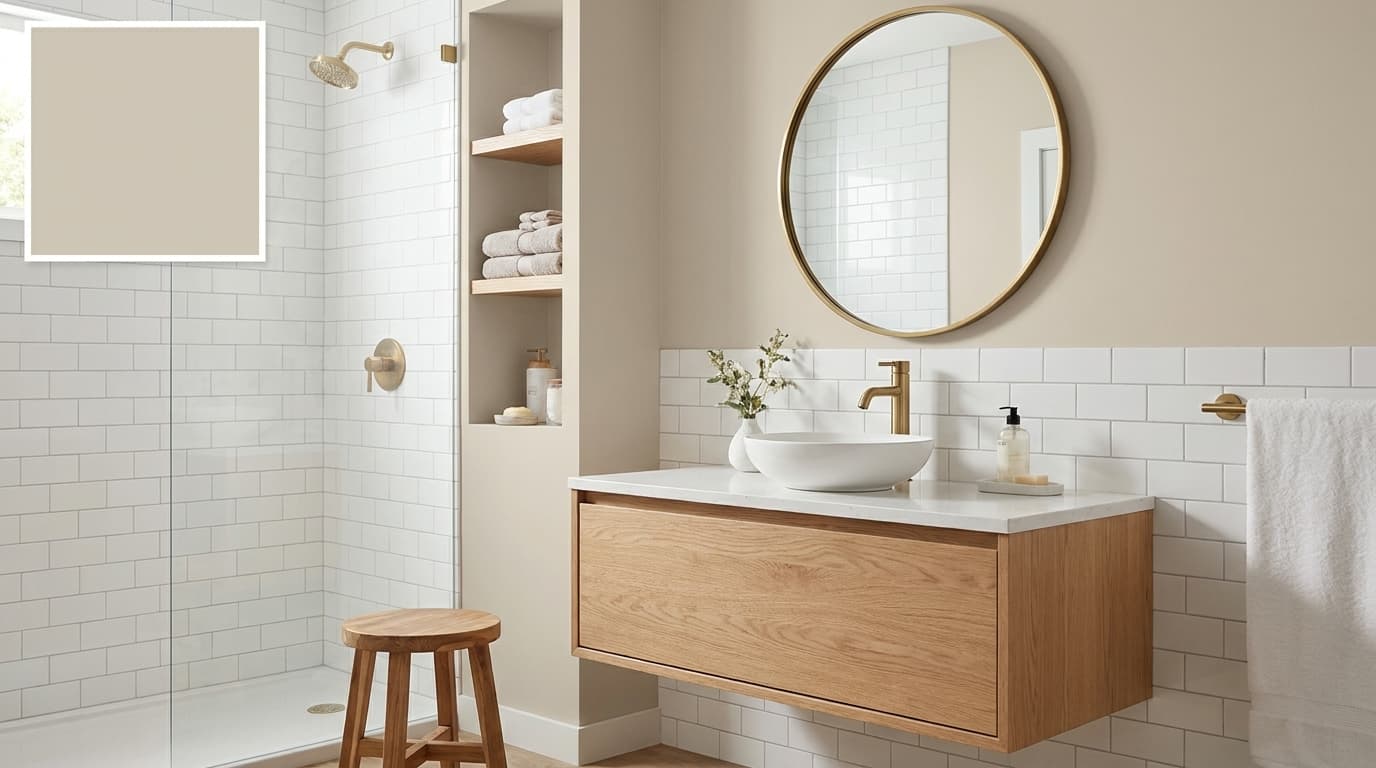
Accessible Beige has a warm, sandy base with subtle gray undertones that prevent it from reading as a traditional yellow beige. The gray keeps it modern, while the warm base keeps it from feeling cold, a balance that makes it one of the most forgiving colors in a small bathroom.
It works alongside warm-toned tile, cool-toned tile, and everything in between because the undertone sits in a genuinely neutral position.
- LRV: 58
- Hex Code: D5CCBF
- RGB: 213, 204, 191
19. Benjamin Moore Soft Chamois (OC-13)
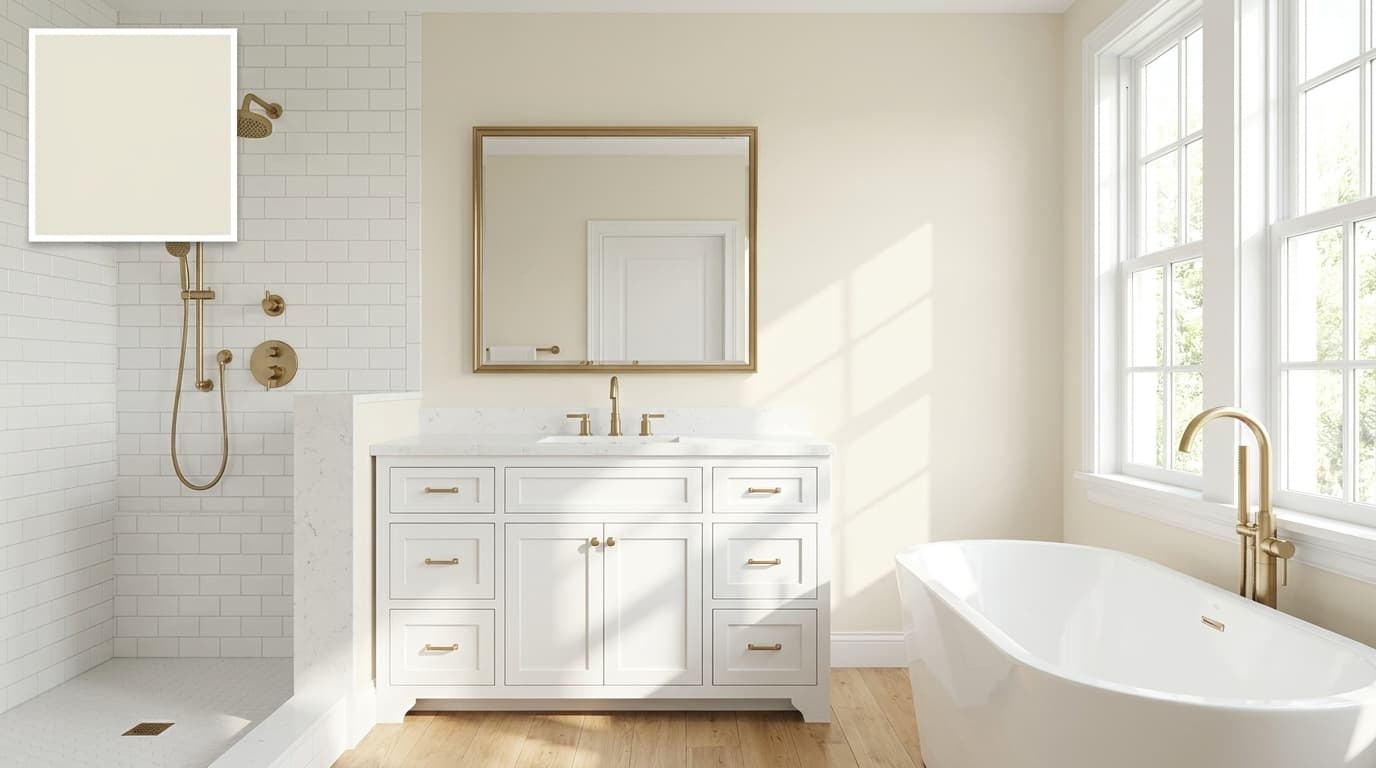
Soft Chamois has a Warm cream with faint peachy notes in to keep it from reading as a saturated or bold color choice. The yellow undertone adds genuine warmth to a small bathroom, the kind that makes the space feel inhabited and considered rather than simply light.
In natural light, the yellow reads cleanly, and the room feels sunny without being loud. Under warm artificial light, the gray undertone surfaces and the color settles into something quieter.
- LRV: 76.83
- Hex Code: F4E7D2
- RGB: 244, 231, 210
20. Sherwin-Williams Sensitive Tint (SW 6267)
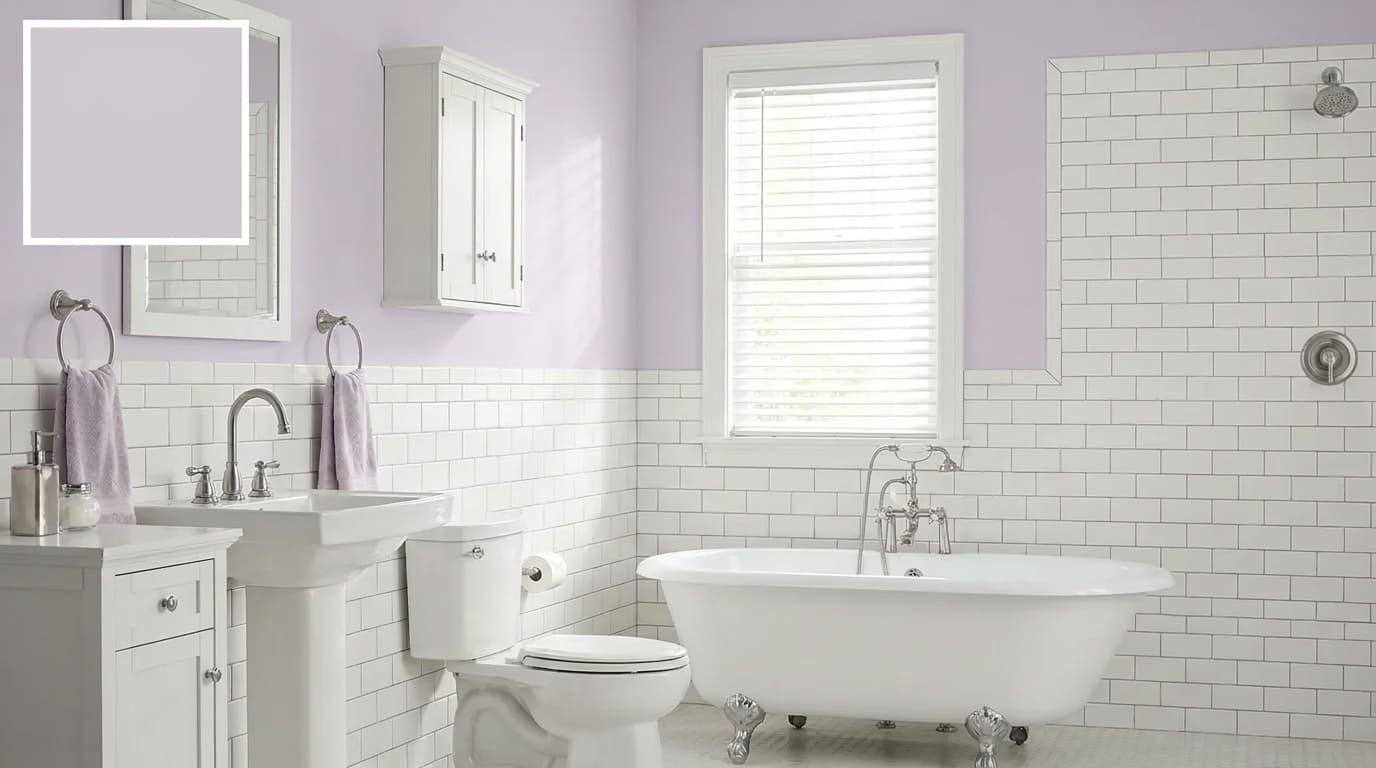
Sensitive Tint has a pale lavender base with enough gray to keep it grounded. In strong light, it reads almost as white with a faint color suggestion, and in lower light, the lavender becomes slightly more present without ever feeling bold.
That restrained quality is what makes it work in a small bathroom. The cool undertone creates the spatial recession effect that pushes walls back visually, while the lavender note adds just enough personality to make the room feel intentional.
- LRV: 59
- Hex Code: D7D6DF
- RGB: 215, 214, 223
21. Benjamin Moore Horizon (1478)
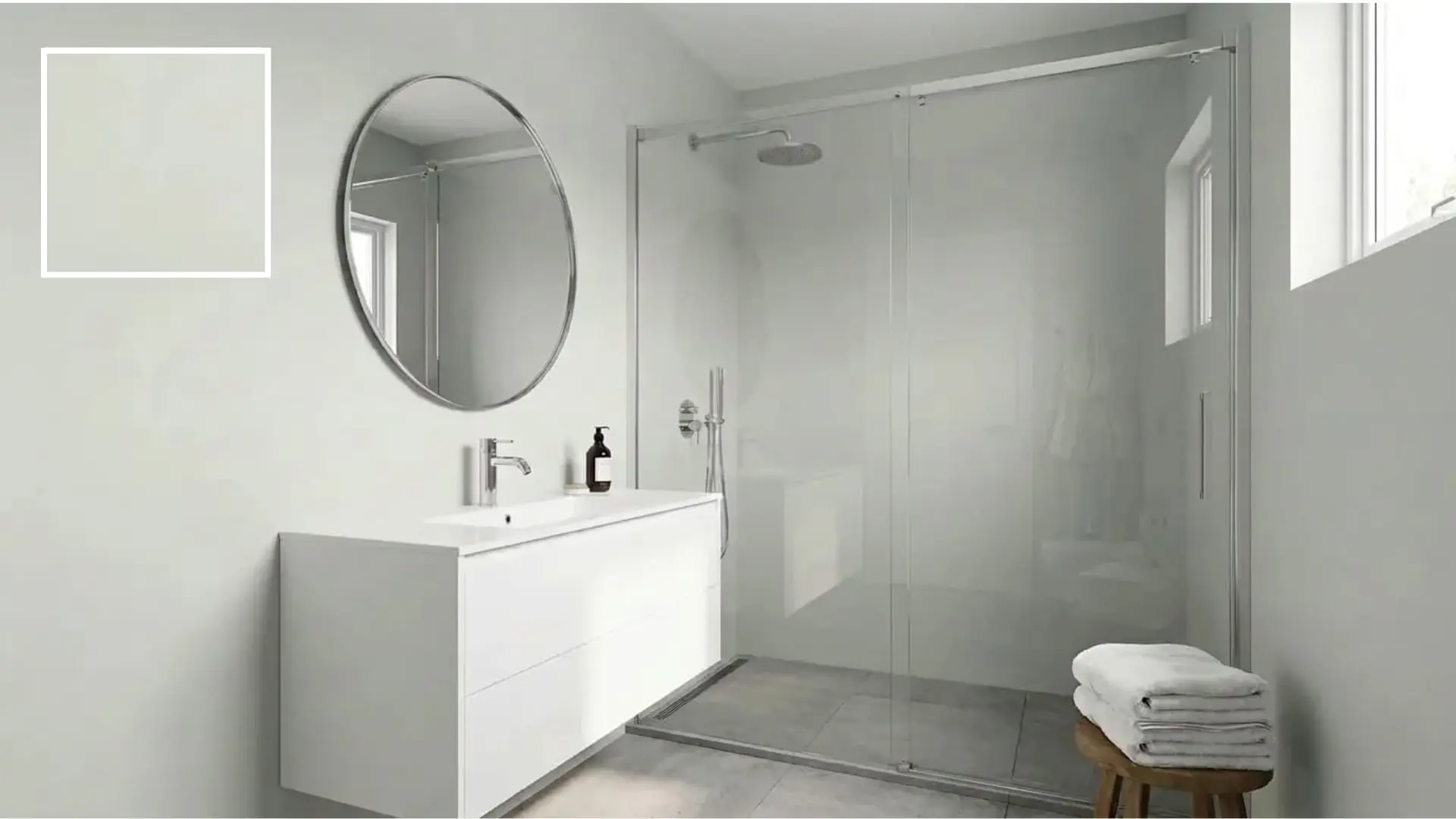
Horizon has a soft, cool gray base with a blue undertone that surfaces consistently across different lighting conditions, unlike some gray-blues that shift dramatically; this one stays relatively true. In a small bathroom, that consistency is an asset because the spatial recession effect is reliable rather than dependent on the time of day.
The blue undertone visually pushes walls back, the gray keeps it grounded, and the overall effect is a room that feels fresher and more open than its size suggests.
- LRV: 59.52
- Hex Code: D2D7DB
- RGB: 210, 215, 219
Any of these colors will work in the right conditions. The one that belongs in your bathroom depends on your light source, your existing tile, and the height of your ceiling.
Paint Colors to Avoid in a Small Bathroom
Not every color fails in a small bathroom for obvious reasons. These five do, and understanding exactly why will save you a repaint and a lot of second-guessing.
- Stark bright white reads clinical under artificial light, amplifies every imperfection, and bounces light harshly rather than distributing it evenly across the room.
- Saturated warm reds, oranges, and mustard yellows have low LRVs that pull walls physically forward, creating claustrophobia rather than the coziness these shades suggest in larger spaces.
- High-contrast two-tone schemes bisect the room horizontally, making it feel shorter and narrower at the same time, which is the opposite of what a small bathroom needs.
- Cool dark grays without strong lighting absorb light aggressively and feel heavy rather than moody, unless the room has adequate lumens to compensate for the absorption.
- Flat matte finish in any color absorbs light, holds moisture, and deteriorates faster in a bathroom environment, undermining even a well-chosen color over time.
Avoiding these is as important as picking the right color. The best shade with the wrong finish or contrast scheme will work against the room, regardless of its LRV.
How to Pair Paint With Your Existing Bathroom
Most bathrooms getting a fresh coat of paint already have tile, fixtures, and lighting in place. The paint has to work around all three, not the other way around.
Match undertones, not colors
The goal is matching undertones, not the color itself. Hold a paint chip against your tile in natural light — if it looks greenish or yellowish next to the tile, the undertones are fighting. You want the chip to read as a quieter, lighter version of the same tone.
- White tile: warm neutral or greige
- Gray or blue-gray tile: pale aqua, soft sage, or cool gray
- Beige or stone tile: warm neutrals like Agreeable Gray or Accessible Beige
- Black or dark tile: light neutrals with high LRV (75+) to create contrast and keep the space from compressing. Alabaster or White Dove work well here.
- Colorful or patterned tile: pull the quietest, least saturated tone from the tile pattern and find a paint that matches it at a much lower saturation. The tile carries the design work; the walls recede.
Factor in Your Fixture Finish
Fixture finish changes how paint reads more than most people expect. Brass pulls warm undertones forward; a greige next to brass looks richer than it does on its own.
Chrome pairs naturally with pale blues and soft grays. Matte black works with almost any color but looks sharpest against mid-tone walls with enough contrast to define it.
Test paint under your actual lighting
Warm bulbs (2700K) push cool colors toward green. Cool bulbs (5000K) make warm tones look washed out.
Test a swatch at least 12 by 12 inches on multiple walls, and view it in the morning, midday, and evening with the light on. The chip under store lighting tells you almost nothing about how the color will behave on your actual wall.
Get all three of these right, undertone, fixture finish, and lighting, and the color you pick will look exactly the way it should. Get one wrong, and even the best color on this list will disappoint.
Strategic Techniques to Make Paint Work Harder
The right color is only half the job. Placement determines whether it actually works.
- Paint the ceiling lighter than the walls: removes the hard visual edge that makes the room feel capped.
- Vertical lines draw the eye upward: a painted stripe from floor to ceiling adds height without structural work.
- Deeper accent wall behind the vanity adds depth: same color family, stronger value. Contrasting colors add edges, and edges shrink rooms.
- Paint trim the same color as the walls: white trim segments the room. Matching it in a higher sheen keeps the eye moving.
Placement costs nothing extra, and does more for the room than switching colors ever will.
Final Thoughts
Picking the right color for a small bathroom feels like a small decision until you’re standing in a freshly painted room that looks nothing like you expected. I hope this made the process less overwhelming and much more certain.
The paint colors that make rooms look larger aren’t a secret; they’re just specific, and specificity is exactly what most paint advice skips.
You now know which colors work, why they work, how to pair them with your tile and fixtures, and which ones to avoid entirely.
That’s everything you need to get it right the first time. If you’ve tried any of these colors or have a question about your specific bathroom, drop it in the comments.